TikTok Software Engineer Interview: How ByteDance's Process Differs From FAANG




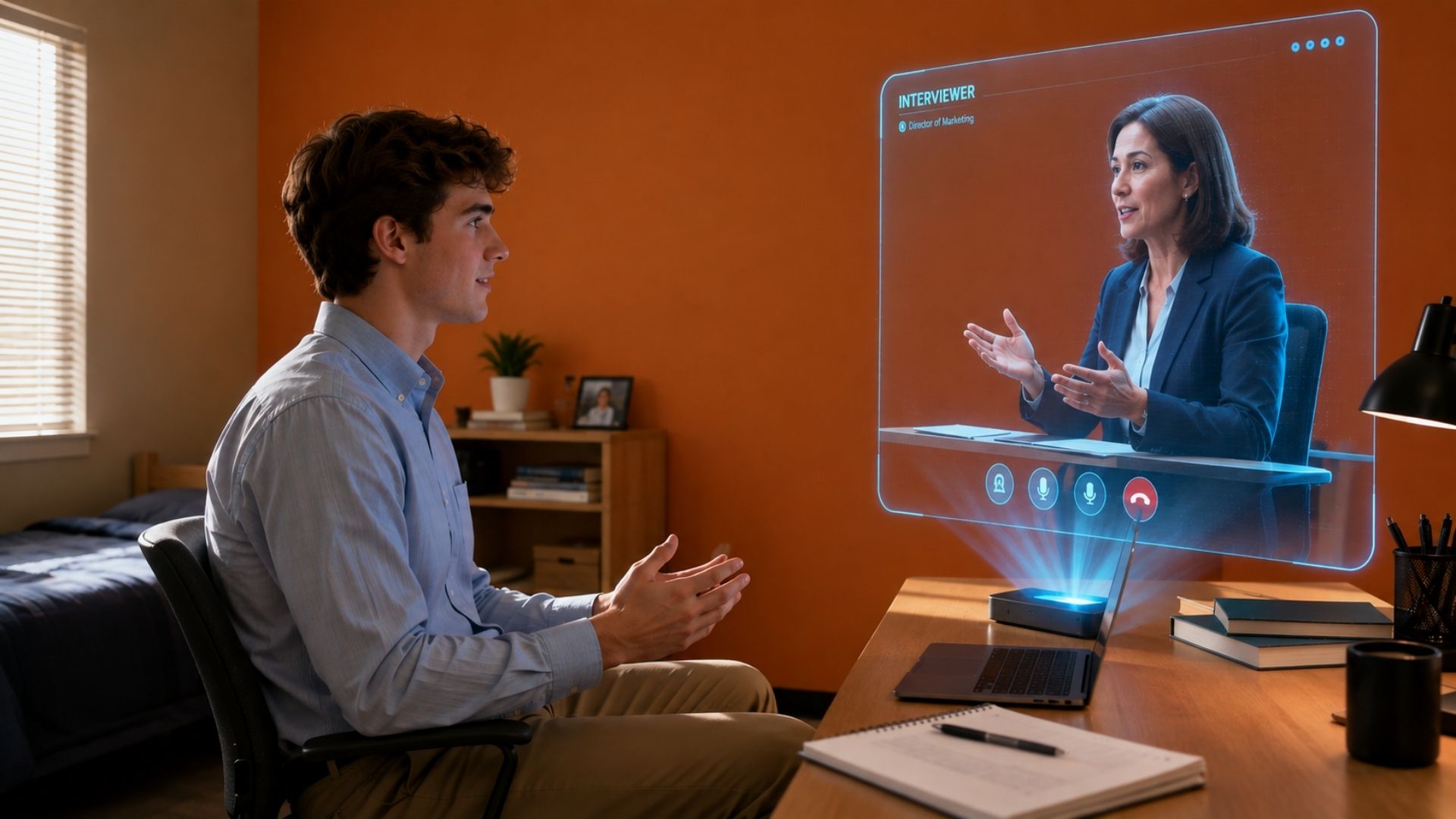
What do most engineers assume when they prepare for TikTok? They expect it mirrors Google or Meta. It doesn't. TikTok's interview structure in 2025 and 2026 is sequential rather than same-day, interviewers have no standardized question bank, and rounds are unlocked one at a time as you pass each stage. Candidates who prepare for a traditional FAANG onsite loop and show up expecting a single looped day of back-to-back interviews are often caught off guard by the pacing, scheduling logistics, and the sheer LeetCode intensity at every stage. This guide covers exactly what makes TikTok's process different and what you need to do to get through it.
Quick Answer
- TikTok runs sequential interview rounds spread over weeks in 2025 and 2026, not a single onsite day like Google or Meta.
- The process includes a recruiter screen, technical phone screen, two to three system design rounds, and a behavioral round assessed by a culture bar team.
- TikTok compensation starts at roughly $200K to $300K total comp for senior engineers, with longer negotiation windows than most FAANG offers.
The Core Structural Difference: Sequential Rounds vs. Same-Day Onsites
At Google, Meta, and Amazon, the onsite interview is a single day: five or six back-to-back rounds with different interviewers, all evaluated together by a hiring committee. TikTok does not do this. Rounds are unlocked sequentially. You pass the online assessment, then get scheduled for a technical phone screen. Pass that, and you get scheduled for the next technical round. The process plays out over several weeks, sometimes closer to six, with each stage gating the next.
This has practical consequences. You cannot rely on one strong day to offset a weaker performance elsewhere. Each round is a standalone evaluation. If you underperform in round two, there is no round five to recover the overall impression. You need to be consistently sharp across an extended window, which requires a different kind of preparation mindset than cramming for a single onsite day.
Another consequence: scheduling overlaps with Chinese business hours. ByteDance's engineering leadership and many senior interviewers are based in China, so expect some evening slots or Sunday interviews. This is not unusual for TikTok. Factor it into your calendar planning from the first recruiter call.
Stage-by-Stage Breakdown of the TikTok Interview Process
Online Assessment
The process typically starts with a timed online assessment on HackerRank, lasting 45 to 120 minutes depending on the role level. Recent grads typically get a 120-minute window. The format usually includes a small set of multiple-choice questions on CS fundamentals (data structures, operating systems, networking, databases) followed by two to four algorithmic coding problems at LeetCode medium-to-hard difficulty. The OA is pass/fail. Solve most problems correctly and you advance. Partial solutions with clean reasoning help but do not consistently offset unsolved problems.
Prepare for the OA by drilling LeetCode mediums under timed conditions. Do not ignore the CS theory questions. Questions on B-trees, TCP vs UDP, and virtual memory management appear regularly and candidates who skip them lose easy points.
Recruiter or Phone Screen
A 30-minute call covering your background, experience, and motivations. The recruiter will also explain the role scope and ask about domain expertise. This is not a pure formality at TikTok. Culture fit and fast-paced environment alignment are screened here. Come prepared to explain why you want to work at ByteDance specifically, not just at a large tech company generically. Interviewers notice vague answers.
If you have a competing offer or a deadline, mention it during this call. TikTok will accelerate the timeline when candidates have external pressure. The standard five-to-six-week process can compress significantly when recruiter logistics are aligned early.
Technical Coding Rounds
Expect two to three live coding rounds, each 45 minutes, conducted via CoderPad or a shared HackerRank environment. Each round presents one or two algorithmic problems. The difficulty is consistently medium-to-hard by LeetCode standards. Common topic areas include dynamic programming, graph traversal (BFS and DFS), sliding window problems, tree operations, heap-based problems, and string manipulation including parsing and pattern matching.
The most important differentiation from FAANG: TikTok interviewers have no standardized question bank. The specific questions rotate regularly and are chosen by each interviewer independently. This means question prediction strategies that work for Google (where certain problems are widely documented) are less reliable at TikTok. You need broad algorithmic coverage rather than targeted problem memorization.
Speed and accuracy both matter. The bar is not just whether you arrive at a correct solution. Interviewers assess how quickly you identify the right approach, how cleanly you handle edge cases, and how clearly you communicate your reasoning while coding. A correct but slow solution with poor edge-case coverage won't consistently pass.
If you want to simulate TikTok coding rounds with real-time feedback, Final Round AI's AI Mock Interview lets you practice live coding sessions under timed conditions with instant performance analysis. This is especially useful for building the speed and communication habits TikTok evaluates.
System Design Round
System design is required for mid-level and senior roles (typically L5 and above) but less common for new grads. The scope leans toward large-scale consumer systems: recommendation feeds, content delivery infrastructure, messaging systems, and media storage at scale. This reflects TikTok's actual product surface, where the core technical challenges are around recommendation systems, low-latency video delivery, and global content distribution.
Unlike Google system design, which often emphasizes distributed infrastructure abstractions, TikTok's system design bar leans toward product-system integration. Expect questions like designing TikTok's video feed ranking system or building a notification delivery system at 500 million daily active users. You should be comfortable discussing trade-offs between consistency and availability, sharding strategies for content metadata, and CDN design for video streaming.
Senior candidates preparing for this round should review how TikTok's engineering blog describes their infrastructure choices. The specific problems in your interview will not match exactly, but understanding the real constraints of their systems makes your answers more grounded and credible.
Behavioral and Hiring Manager Round
The final round is 45 to 60 minutes with a hiring manager or senior team member. The behavioral portion at TikTok is not as competency-framework-driven as Amazon's Leadership Principles structure. There is no formal equivalent of Amazon's 14 LP rubric. Instead, TikTok interviewers look for evidence of fast execution, innovation under ambiguity, and ownership of outcomes.
Prepare specific stories using the STAR format (Situation, Task, Action, Result) that demonstrate speed and impact. Stories about shipping quickly, iterating under uncertainty, or driving technical decisions without full information land well. Stories about methodical long-term projects with committee approval chains do not align as well with TikTok's culture.
A strong answer to a TikTok behavioral question does not just describe what happened. It explains the specific decision you made, why you made it over the alternatives you considered, and what the measurable outcome was. Vague answers about collaborating with the team without specific outcomes consistently underperform.
Practice behavioral questions with Final Round AI's Interview Copilot, which provides live guidance during real interviews. If you have a TikTok behavioral round scheduled, the Interview Copilot can help you surface the right story and structure your answer in real time, so you're not hunting for the best example under pressure.
How Hard Is TikTok Compared to Google, Meta, and Amazon?
TikTok's coding bar is higher than Amazon's and roughly equivalent to Google's in terms of algorithmic complexity. The difference from Google is primarily structural, not difficulty-based. Google runs more rounds in a single day with more standardized evaluation. TikTok runs fewer rounds sequentially with higher interviewer discretion.
Compared to Meta, TikTok leans heavier on algorithmic depth and lighter on behavioral complexity. Meta's behavioral rounds use a detailed competency rubric tied to specific Meta core values. TikTok's behavioral evaluation is more full-picture and less rubric-bound, which means it rewards candidates who can tell specific, concrete stories rather than those who have memorized a framework.
Compared to Apple, TikTok is significantly more LeetCode-intensive. Apple's coding rounds often include more domain-specific or role-specific problems. TikTok's rounds are consistently general algorithmic, which actually favors candidates who have put in broad LeetCode preparation.
One area where TikTok is distinctly harder than most FAANG companies: the combination of speed and accuracy requirements in coding rounds. At Google, a clean correct solution with clear communication typically passes even if it takes the full session. At TikTok, interviewers specifically note whether a candidate produced the solution in a reasonable time window. Both dimensions need to be strong simultaneously.
Compensation and Offer Structure in 2026
TikTok software engineer compensation for mid-level roles in the US typically ranges from $168,000 to $257,000 total compensation annually, including base salary, annual bonus, and RSU grants. The RSU vesting schedule and exact breakdown vary by team and negotiation. ByteDance as a private company issues RSUs that are not publicly traded, which is a meaningful difference from the equity packages at publicly listed FAANG companies. Factor this into your offer evaluation.
If you receive an offer and have competing offers from Google, Meta, or Amazon, TikTok will typically engage in negotiation. Having a documented competing offer in writing is the most effective lever. Final Round AI's Interview CoPilot™ helps you rehearse salary negotiation responses before the offer stage, since your presentation and confidence directly affects the initial compensation band your offer lands in.
Candidates who went through multiple FAANG loops share what preparation depth actually looks like in this community thread on FAANG behavioral prep depth. Final Round AI offers dedicated practice sessions to build the multi-round stamina TikTok's process demands.
For more company interview breakdowns, browse the company interview guides on Final Round AI.
Related Interview Guides
- Amazon Software Engineer Interview: What the Loop Actually Tests
- Google Software Engineer Interview: Preparing for the Full Onsite
- System Design Interview Guide: How to Structure Any Answer
- Behavioral Interview Questions: STAR Method Answers That Actually Work
- Top 10 Interview Software Solutions To Streamline Your Hiring Process
Start Preparing for Your TikTok Interview
TikTok's process is longer, more sequential, and more LeetCode-intensive than most FAANG loops. The candidates who get offers are the ones who sustain preparation across the full five-to-six-week window, not just the day before each round. Build a consistent practice habit, simulate each round type before it happens, and treat every sequential stage as its own standalone test.
Interview Copilot is built for exactly this kind of preparation. Use it to simulate behavioral rounds before your hiring manager call, get real-time guidance during live interviews, and review your performance after each session so you go into the next stage sharper.
Frequently Asked Questions
How hard is the TikTok software engineer interview?
TikTok's coding rounds are medium-to-hard by LeetCode standards, roughly equivalent to Google in algorithmic difficulty. The key difference is that TikTok tests both speed and accuracy simultaneously, and interviewers have full discretion over question selection rather than a standardized bank. Most engineers rate the overall process as significantly more difficult than Amazon.
How many rounds does the TikTok software engineer interview have?
The typical process includes an online assessment, a recruiter screen, two to three technical coding rounds, a system design round for experienced hires, and a final behavioral round with a hiring manager. Total rounds are usually five to six, scheduled sequentially rather than on a single onsite day, so the full process takes four to six weeks.
Does TikTok use LeetCode in interviews?
Yes. TikTok's technical rounds are heavily LeetCode-oriented. Expect medium-to-hard difficulty problems across dynamic programming, graph algorithms, sliding window, trees, and string manipulation. The online assessment is also LeetCode-style. Unlike some companies that blend domain-specific problems, TikTok's coding rounds are consistently general algorithmic across all stages.
How does TikTok interview differ from Google?
The primary structural difference is sequential rounds versus a same-day onsite loop. Google runs five to six rounds on a single day evaluated by a central hiring committee. TikTok unlocks rounds one at a time over four to six weeks, with each round independently gating the next. TikTok also has no standardized question bank, so question prediction strategies that work for Google are less reliable.
Can I use AI tools during the TikTok interview?
AI use during TikTok interviews is strictly prohibited. Interviewers conduct live coding sessions via shared environments and can observe your approach in real time. But using Final Round AI's Interview CoPilot™ to prepare before your interviews is both allowed and highly effective.
Table of Contents
Related articles
Interview Sidekick Pricing: What $80/Month Gets You
Interview Sidekick pricing has two tiers, but the paid plan's real cost depends on promo codes. Full breakdown: plans, costs, and honest verdict.

Body Language Tips for Interview Success
Did you know that 93% of what we communicate in job interviews is through body language? We'll look at how to use body language to increase your chances of getting the job you want.

Capital One Virtual Job Tryout: Complete Prep Guide
The Capital One VJT has 4 sections and ~50 questions. Learn what each section measures, the no-backtracking rule, scoring, retake policy, and how to prepare.

5 Best LockedIn AI Alternatives in 2026 (Ranked by Use Case)
5 best LockedIn AI alternatives in 2026 ranked by use case. Interview Copilot for full coverage, Sensei AI for lower cost, Cluely for stealth. Covers pricing and what each alternative does better.

Mastering Behavioral Interviewing: Tips and Strategies
Behavioral interviewing guide covering the STAR method, SBO format, story bank preparation, and what interviewers are scoring. Updated for 2025 and 2026 with data from 816,000 live interview sessions.