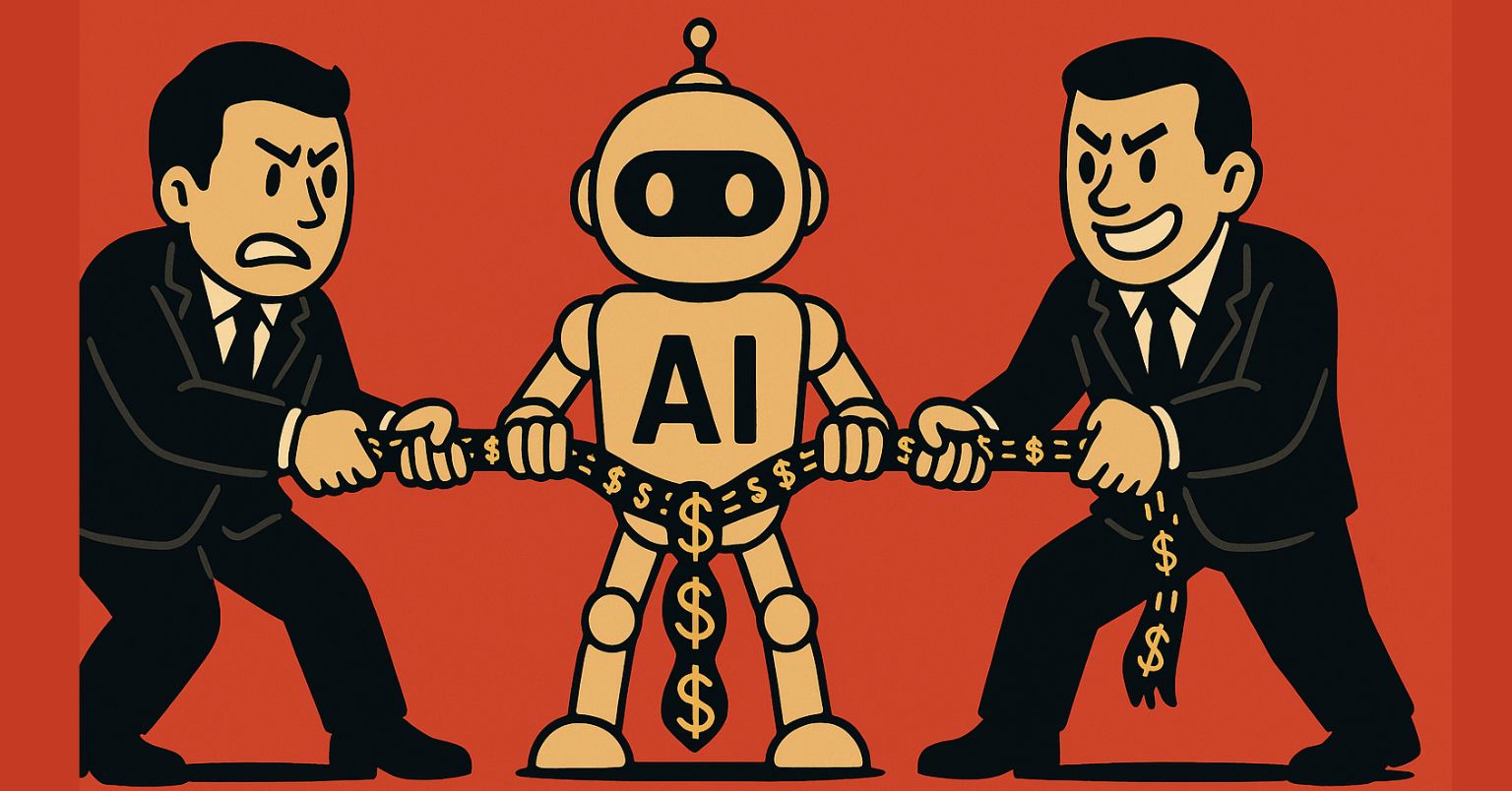
Software Engineer Title Will Go Away Says Boris Cherny




No more SWE in the job market? Imagine a world where writing computer code becomes as outdated as using a typewriter. According to Boris Cherny, the creator of Anthropic’s Claude Code, that world is arriving this year.
Claude Code Creator Thinks ‘SWE’ Role is Going Away
In a recent interview with Y Combinator’s “Lightcone” podcast, Boris Cherny made a bold prediction that the job title “software engineer” will start to disappear soon.
Cherny said:
“I think we are going to start to see the title software engineer go away. And I think it's just going to be maybe builder, maybe product manager, maybe we'll keep the title as kind of a vestigial thing, but the work that people do, it's not just going to be coding.”
Right now, when most people hear “software engineer,” they imagine someone sitting in front of a computer, writing lines of code all day. That has been the core identity of the role for decades. But as we know, the traditional idea of a “software engineer” is changing fast.
Boris believes that the job title “software engineer” might slowly fade away. Not because coding disappears. Instead, people might be called “builders” or “product managers,” or something more general.
Even if companies keep the title “software engineer,” it may just be a leftover label
“Its software engineers are also going to be writing specs. They are going to be talking to users, like this thing that we are starting to see right now in our team, where engineers are very much generalists and every single function on our team codes like our PM's code, our designers' code, our EM codes, our like everyone, our finance guy codes like everyone on our team codes. We are going to start to see this everywhere.”
The new ‘software engineer’ will focus more on writing specifications, talking to users to understand their needs, and helping shape the overall product experience.
In a traditional setup:
- Engineers write code
- Designers design
- Product managers plan
- Finance handles budgets
But in this new model, everyone is more of a generalist.
That means people are not limited to one narrow function. They understand the product as a whole. They can jump in and contribute technically when needed.
This shift is largely driven by AI. When AI tools can handle complex coding tasks quickly, writing code becomes less of a rare skill and more of an accessible tool. That frees up time for humans to focus on creativity and problem-solving.
When AI Writes 100% of the Code
In a post on X, he revealed that he hasn’t written a single line of code by hand in over two months.
As always, a very thoughtful and well reasoned take. I read till the end.
, Boris Cherny (@bcherny) January 27, 2026
I think the Claude Code team itself might be an indicator of where things are headed. We have directional answers for some (not all) of the prompts:
1. We hire mostly generalists. We have a mix of senior…
Instead, AI tools like Claude Code write everything for him. Even more remarkably, he shipped 22 code updates (called “pull requests”) in a single day, with every line generated by artificial intelligence.
He is not alone.
At Anthropic, the company behind Claude, between 70% and 90% of all code is now AI-generated, for Claude Code specifically, about 90% of its own code is written by itself.
Adding context from Nvidia’s CEO Jensen Huang, who has said that coding itself is just one task of engineering and not the core purpose. Engineers should focus on solving problems rather than writing code.
To understand how widespread this shift is, consider that 4% of all public GitHub commits are currently authored by Claude Code. That might sound small, but analysts predict this number could jump to 20% or more by the end of 2026.
Bottom Line
If you are a student thinking about becoming a software engineer, should this news scare you? Not necessarily. But it does mean the job will look very different from what it was even five years ago.
According to a 2025 Stack Overflow Developer Survey, 84% of programmers already use AI tools. However, only 31% use full coding agents like Claude Code, meaning adoption is still in early stages.
The skills that will matter most in this new world aren’t necessarily about memorizing programming languages or syntax. Instead, future tech workers will need:
- Strong problem-solving abilities: Understanding what needs to be built and why
- Communication skills: Translating user needs into specifications that AI can work from
- Critical thinking: Spotting when AI makes mistakes or suggests poor solutions
As Cherny noted, Anthropic now hires “mostly generalists” who can work across different areas, rather than specialists in specific programming languages.
The transformation happening in software development is likely just the beginning.
What to Call Yourself If Your Job Title Is Evolving
Boris Cherny is making a prediction about job titles, not about job functions. The underlying work that software engineers do is not disappearing. What is changing is how that work is described, what proportion of it involves writing code versus directing AI to write it, and which parts of the role require the deepest human skill.
For engineers navigating this shift, the practical question is how to present yourself to employers when the vocabulary is in flux. A few patterns are emerging. Titles like AI engineer, developer experience lead, and systems architect are increasingly appearing in job postings at companies that are honest about how their engineering workflows have changed. These titles emphasize the judgment and direction functions rather than the implementation function.
If you are updating your resume or LinkedIn profile, consider framing your experience around outcomes and decisions rather than languages and frameworks. Instead of describing yourself primarily by what tools you can use, describe the problems you have solved, the systems you have designed, and the teams you have influenced. That framing holds its value as the tool landscape shifts.
In interviews, the question about how AI has changed your work is now almost universal at technical companies. Having a specific, honest answer about how you use AI tools, what judgment calls you make about trusting or overriding them, and how your work has changed over the past two years is more valuable than any particular credential. Practicing that answer until it flows naturally with Interview Copilot is one of the highest-return preparation steps available to engineers right now.
Many candidates use real-time interview AI to prepare for questions exactly like these.
Frequently Asked Questions
How do you stay competitive in today's job market?
Keep your skills current by learning the tools your industry is adopting, especially AI and automation software. Update your LinkedIn and resume quarterly rather than only when you are actively looking. Build relationships with people in your field before you need their help. Staying curious and visible in your professional community compounds over time into real career advantages.
What is the most effective way to use LinkedIn for job searching?
Set your profile to Open to Work, visible to recruiters only if you prefer privacy. Write a headline that describes what you do and the value you bring, not just your job title. Post or comment on industry topics regularly so you stay visible. Reach out directly to hiring managers at target companies with a short, specific message rather than just applying through the job portal.
How should you prepare the night before a job interview?
Review the job description and your resume side by side so you can articulate how your experience maps to each requirement. Research the company's recent news, products, and culture. Prepare two to three thoughtful questions to ask the interviewer. Lay out your clothes, confirm the address or video link, and get to sleep at a reasonable hour. Preparation significantly reduces anxiety.
What questions should you always ask at the end of a job interview?
Ask what success looks like in the first 90 days, what the biggest challenges facing the team are, and what the interviewer enjoys most about working there. These questions show genuine interest and give you useful information to evaluate the role. Avoid asking about salary or benefits in an initial interview unless the interviewer raises it first.
Table of Contents
Related articles

Essendant Layoffs: 1,278 Cut as Company Says It Will Close
Essendant layoffs hit 1,278 jobs across six states as the wholesaler tells regulators it expects to cease operations. What affected workers should do next.

Tech Layoffs Hit 19,000 in September 2025 as AI Replaces Roles
Over 19,000 tech workers lost their jobs in September 2025 as companies turned to AI. See which companies made the biggest cuts.

CBS News Cuts 6% of Its Staff and Ends Radio Service
CBS News to lay off 6% of workforce and shut down its radio service after a century as it shifts toward a digital future.

McKinsey Lays Off 200 Tech Employees as AI Takes Over Roles
McKinsey eliminates 200 tech jobs amid a strategic push toward AI-driven operations, reflecting broader changes in the consulting sector.
Replit CEO Says I Don't Want My Tesla Autopilot to Be Vibe Coded
Replit CEO Amjad Masad said in a podcast that AI code has limits, making clear why critical systems still need real developers behind them.