Nvidia Exec Reveals Why AI Resumes Boost Hiring Chances



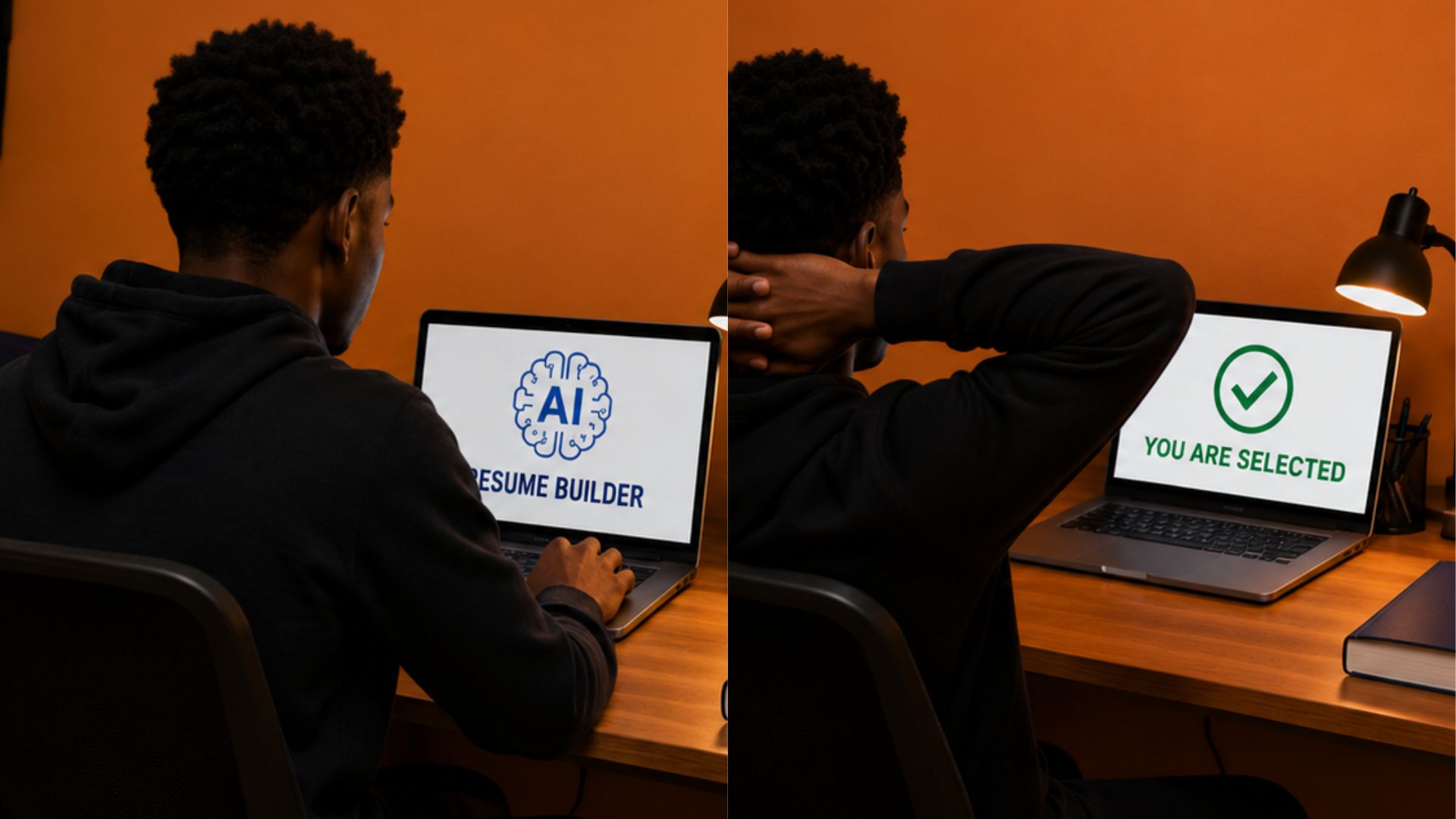
In 2026, using AI to build your resume is a must. NVIDIA’s top executive, Jonathan Ross, believes AI hiring systems may favor resumes created by the same AI models they use.
Jonathan Ross is a tech entrepreneur, best known as the founder and CEO of Groq, an AI hardware company. He previously worked at Google, where he helped develop the Tensor Processing Unit (TPU) for AI workloads. He is currently the Chief Software Architect at Nvidia.
The "AI Likes Its Own Kind" Opportunity in Resumes
Speaking at the Sohn Investment Conference 2026, Ross said “AI likes to use AI,” referring to research showing that AI-generated resumes often score better when screened by matching AI systems.
While Ross was speaking about how models can now generate their own training data, leading to linear improvements, the host reminded him about how AI-written resumes are winning over.
“Someone did a study and showed that resumes generated by one LLM are preferred by that same LLM over resumes generated by other models. Recruiters are now using LLMs to decide who to interview, so you need to figure out which LLM the recruiter is using.
You should create one resume with Claude Opus 4.7 and another with ChatGPT to maximize your chances of being selected.”
Ross discusses an interesting phenomenon where LLMs tend to prefer summaries generated by their own architecture over those created by competing models.
Because recruiters are increasingly using AI to screen candidates, the speakers (jokingly) suggest that job seekers should tailor their resumes to the specific LLM being used by the recruiter to increase their chances of selection.
For example, a resume written with ChatGPT could perform better if the recruiter’s screening tool also uses OpenAI models.
The Real Study on AI Tools Preferring AI-Written Resumes
The article also referenced a 2025 research paper called “AI Self-preferencing in Algorithmic Hiring.”
Researchers tested more than 2,200 resumes and found that AI-generated resumes were 23% to 60% more likely to be shortlisted compared to similar human-written resumes.
They believe this happens because AI can recognize patterns similar to its own writing. Bigger and more advanced models showed stronger bias.
Think about what that means in practice.
Two candidates apply for the same job. Their qualifications are identical.
One wrote their resume by hand; the other used ChatGPT or a similar tool.
Candidates using the same LLM as the evaluator are 60% more likely to be shortlisted than equally qualified applicants submitting human-written resumes.
The research highlights how AI is rapidly changing job interviews and hiring overall. Many companies now use AI to review resumes, and some systems can automatically reject candidates before a human even sees the application.
But note that the AI preference bias is not neutral across all jobs.
In simulated hiring pipelines across 24 occupations, the disadvantage for human-written resumes is most pronounced in business-related occupations such as sales, accounting, and finance, and least evident in fields such as agriculture and automotive.
Bottom Line
This is not a niche trend. A new survey found that more than 50% of new job applicants use AI tools to help write resumes and cover letters.
But there is a real trap here, and it is worth being direct about it.
A TopResume survey found that 19.6% of hiring managers reject candidates if they believe the resume was fully generated by AI. Recruiters are trained to spot resumes that sound like they were produced entirely by a machine with overly polished but hollow language.
The winning approach is to use AI as a collaborator, not a ghostwriter. Let AI tighten your language and improve ATS compatibility. But make sure the experience, the numbers, and the stories behind the bullet points are genuinely yours. Here are some practical resume tips for you.
How to Build an AI-Optimized Resume That Still Sounds Human
The advantage of using AI to build your resume is real, but it comes with a trap. Resumes generated entirely by AI often read as generic because they are. The goal is not to hand everything off to AI but to use it to sharpen what you already have.
Start with the job description and identify the five or six skills mentioned most prominently. Then ask an AI tool to help you rewrite your bullet points to include those terms while keeping the specifics from your actual experience. The result is a resume that passes keyword filters without becoming a list of buzzwords.
Quantify wherever possible. Numbers make AI-generated content sound real because they require context that only you have. Reducing report turnaround from 5 days to 1 day is stronger than mentioning improved efficiency, and no AI tool can fabricate that number for you.
Once your resume lands you an interview, the work is not over. Practicing your answers in advance with Interview Copilot helps you translate your resume accomplishments into confident spoken answers rather than struggling to recall specifics under pressure.
Many candidates use AI interview tool to prepare for questions exactly like these.
Frequently Asked Questions
What did the Nvidia executive say about AI resumes improving hiring chances?
The Nvidia executive noted that resumes demonstrating hands-on AI tool experience, specific AI project contributions, and quantified productivity outcomes from AI adoption consistently outperform generic resumes in technical screening. Hiring managers at AI-forward companies use resumes to assess whether candidates can contribute to AI-driven workflows from day one, making AI fluency a differentiating signal.
How should job seekers update their resumes to reflect AI skills?
Job seekers should add a skills section that lists specific AI tools they use professionally, such as ChatGPT, Copilot, Claude, or Midjourney. More importantly, they should integrate AI accomplishments into their work experience bullet points, for example noting that they reduced report generation time by 40% using AI automation. Specificity and measurable impact matter more than general AI literacy claims.
Does listing AI tools on a resume actually help get interviews?
Yes, particularly at tech companies and firms undergoing digital transformation. ATS systems increasingly filter for AI tool keywords. Hiring managers in product, engineering, and operations roles report that AI fluency signals adaptability. However, listing AI tools without demonstrating applied outcomes in the resume body adds less value than combining tool names with specific, measurable results.
What AI tools should job seekers learn to strengthen their resume for 2026?
The most valuable AI tools to learn for job seekers in 2026 are ChatGPT and Claude for writing and analysis, GitHub Copilot for software developers, Tableau or Power BI with AI features for data roles, Salesforce Einstein for sales and CRM roles, and Canva AI or Adobe Firefly for marketing and design positions. Choose tools relevant to your target industry rather than learning them all.
Table of Contents
Related articles
![Biggest Tech Layoffs in USA[Updated June 2026]](https://cdn.prod.website-files.com/6660a5bfdcf6c5fbf039f446/699c703f681a0137fe952ff0_USA%20LAYOFFS%202026.jpg "Biggest Tech Layoffs in USA[Updated June 2026]")
Biggest Tech Layoffs in USA[Updated June 2026]
Track major US layoffs in 2026. Get the latest updates on job cuts and affected companies.

72% of Workers Say Job Skills Are Changing Due to AI

87% of HR Leaders Planning Layoffs Because of These 2 Reasons
A new report reveals 87% of HR leaders have conducted or plan layoffs in 2026. See what the key reasons are driving the cuts.

Even Google CEO Thinks AI Fear Is Justified
Sundar Pichai says students booing AI mentions during speeches reflects real fears about jobs, and we have to be mindful of that.
Is Labor Day Still Relevant in 2025 When the Labor is AI?
From fighting for eight-hour workdays in 1886 to battling job automation in 2025, workers face a new challenge. As AI replaces millions of jobs, the question isn't whether machines can do our work better. It's whether we can preserve human dignity in a world where algorithms never take breaks.

Paramount Lays Off 1,600 Employees in Third Major Round of Cuts This Year
Paramount cuts 1,600 jobs in South America, the third major layoff round in 2025. Company targets 15% workforce reduction to save $3 billion under new CEO.