"Godfather of AI" Geoffrey Hinton Says Tech Investment Can't Pay Off Without Destroying Jobs



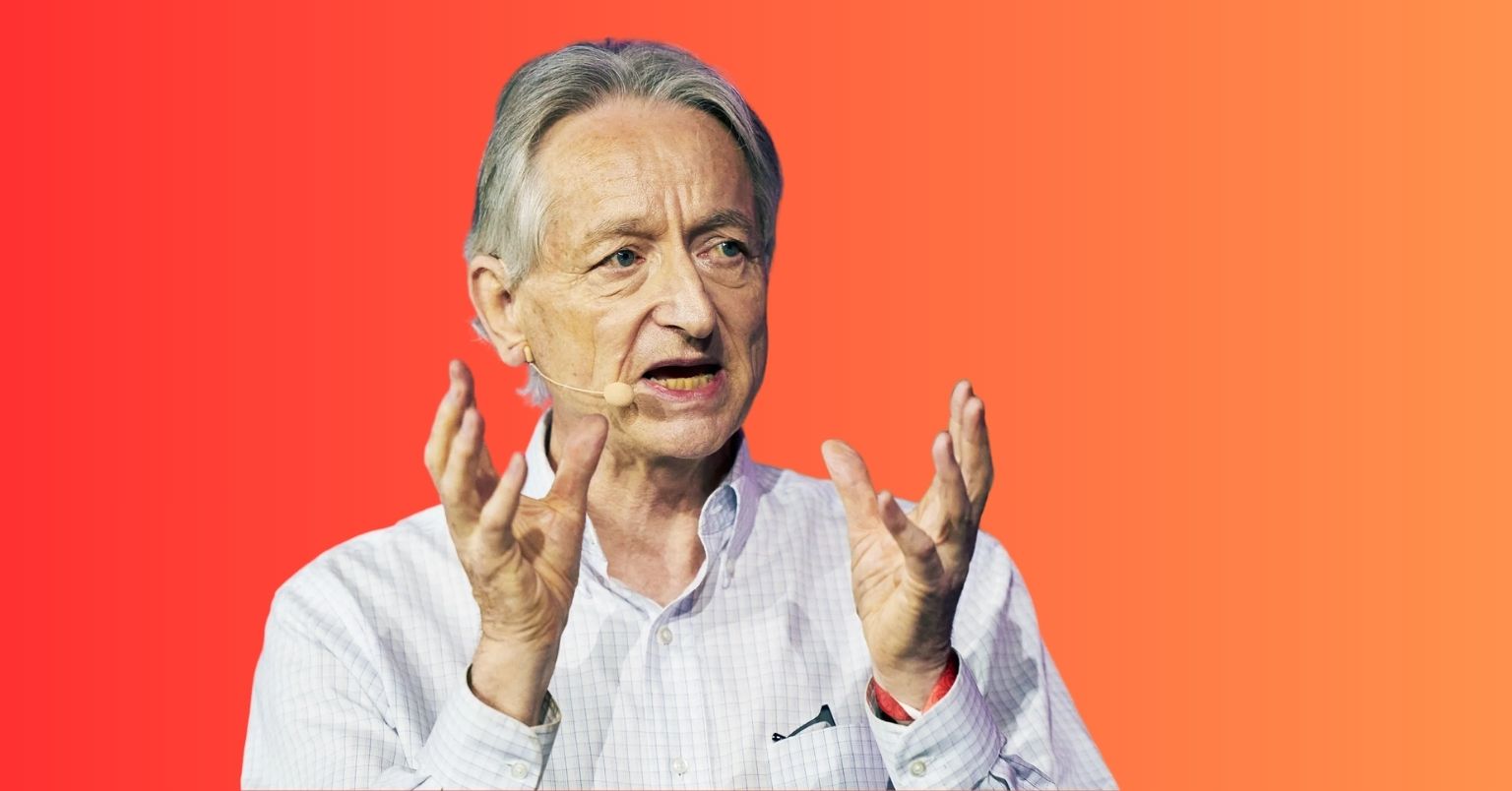
Geoffrey Hinton said companies investing trillions in artificial intelligence can only make their money back by eliminating human jobs.
The Nobel Prize-winning computer scientist told Bloomberg TV's Wall Street Week that replacing workers is the primary way tech companies will generate returns on their massive AI investments.
"The obvious way to make money out of it, apart from charging fees to use chatbots, is to replace workers with something cheaper," Hinton said in the interview.
When asked directly whether AI investments can pay off without destroying jobs, Hinton responded: "I believe that it can't. I believe that to make money you're going to have to replace human labor."
Tech Giants Betting on Job Replacement
Hinton, known as the "Godfather of AI" for his pioneering work on neural networks, said major tech companies are deliberately planning for widespread job elimination.
"I think the big companies are betting on it causing massive job replacement by AI, because that's where the big money is going to be," he said.
The statement comes as four major tech companies - Microsoft, Meta, Alphabet, and Amazon - are expected to increase AI-related capital expenditures to $420 billion next fiscal year, up from $360 billion this year, according to Bloomberg.
OpenAI has announced infrastructure deals totaling $1 trillion with companies including Nvidia, Broadcom, and Oracle.
This Time Is Different
Hinton rejected the argument that AI will create new jobs to replace those it eliminates, challenging a common position among economists and tech leaders.
"Some economists say these big changes always create new jobs. It's not clear to me that this will," Hinton said. "And I think the big companies are betting on it causing massive job replacement by AI, because that's where the big money is going to be."
His comments align with statements he made in September 2025 to the Financial Times, where he predicted AI will "create massive unemployment and a huge rise in profits."
"What's actually going to happen is rich people are going to use AI to replace workers," Hinton said. "It's going to create massive unemployment and a huge rise in profits. It will make a few people much richer and most people poorer. That's not AI's fault, that is the capitalist system."
Why Left Google
Hinton left Google in 2023 after decades of AI research. He clarified his departure, addressing media reports that claimed he quit specifically to warn about AI dangers.
"I left because I was 75, I could no longer program as well as I used to, and there's a lot of stuff on Netflix I haven't had a chance to watch," Hinton said. "I had worked very hard for 55 years, and I felt it was time to retire. And I thought, since I am leaving anyway, I could talk about the risks."
Hinton, now 77, won the 2024 Nobel Prize in Physics for his work on machine learning. He is currently a professor emeritus in computer science at the University of Toronto.
AI Benefits and Societal Organization
Despite his warnings about job displacement, Hinton acknowledged AI's potential benefits when asked if he would go back in time and stop AI from developing.
"It's not like nuclear weapons, which are only good for bad things," Hinton explained. "It's a difficult decision, because it can do tremendous good in health care and education. It'll do tremendous good, and in fact if you think about it increasing productivity in many, many industries, that should be good."
He emphasized that the problem lies not with the technology itself but with how society distributes AI's benefits.
"The problem ultimately is not owing to AI itself, but on how we organize society," Hinton said.
In his interview, he used a specific example: "If you think about it, increasing productivity in many many industries should be good. The reason it's bad is because of the way society's organized. So that Elon Musk will get richer and a lot of people get unemployed and Musk won't care. I'm using Musk as a sort of stand-in. That's not on AI, that's on how we organize society."
The Bottom Line
Hinton's warnings carry significant weight because he invented the neural network technology that powers modern AI systems including ChatGPT, Google's AI platforms, and other major AI tools.
His message is direct: companies are investing hundreds of billions in AI because they believe replacing human workers will generate the returns they need. According to Hinton, the job displacement isn't an unintended side effect - it's the core business strategy behind these massive investments.
What This Economic Argument Means for Workers in AI-Adjacent Fields
Geoffrey Hinton is making a structural argument, not just a warning. He is saying the math does not work any other way: if companies are spending trillions on AI infrastructure, the return on that investment must come from somewhere, and the most direct source is labor cost reduction. The logic is difficult to dispute.
For workers in knowledge-intensive fields, this creates a specific kind of career risk that is worth mapping clearly. The most vulnerable positions are those that currently require human judgment to manage AI limitations. As those limitations shrink, the human layer becomes thinner. Roles in quality review, content moderation, data labeling, and first-level analysis are all in this category.
The more durable positions are those where the value comes not from executing a known process but from defining what problem to solve and evaluating whether the solution is actually correct. Strategic roles, client-facing positions, and any role that involves navigating novel situations are more resilient because they require contextual judgment that AI systems still produce unreliably.
For workers trying to position themselves toward these more resilient roles, the clearest path is to document decisions, not just outputs. The ability to explain why you made a particular choice, what alternative you considered, and what signal told you the approach was working is exactly the kind of narrative that organizations are trying to preserve as they automate the underlying tasks. Demonstrating that reasoning under pressure in an interview is the most direct way to show you belong in the roles that are not going away.
Many candidates use AI-powered interview assistant to prepare for questions exactly like these.
Frequently Asked Questions
Who is Geoffrey Hinton and why is his opinion significant?
Geoffrey Hinton is a British-Canadian computer scientist widely regarded as one of the founding figures of modern deep learning, which powers the majority of today's AI systems including large language models. He shared the 2024 Nobel Prize in Physics for his contributions. Hinton left Google in 2023 to speak more freely about AI risks, making his comments on AI economics, labor, and investment particularly influential in policy and industry discussions.
What does Hinton argue about AI investment returns?
Hinton has argued that the massive capital being invested in AI infrastructure will not generate returns unless AI creates real economic value that is distributed broadly rather than concentrated among a small number of technology companies and investors. He is concerned that AI productivity gains may accrue primarily to capital holders while displacing workers without equivalent wage growth or new job creation that benefits the broader economy.
What are Hinton's primary concerns about AI's societal impact?
Hinton's primary concerns center on existential risk from superintelligent AI systems that could pursue misaligned goals, the near-term risk of autonomous AI weapons, economic inequality amplified by AI-driven labor displacement, and the concentration of AI capability among a small number of powerful technology companies without adequate democratic oversight or regulatory guardrails to ensure responsible deployment.
How should AI professionals respond to the risks Hinton identifies?
AI professionals can contribute by advocating for transparent AI development practices within their organizations, participating in AI safety research as a career consideration, supporting regulatory frameworks that require accountability and auditability in AI systems, and actively documenting and communicating the limitations of models they build rather than overstating capabilities in ways that lead to misuse or over-reliance by end users.
Table of Contents
Related articles
Chegg Lays Off 45% of Workforce as AI Destroys Homework Help Business
Chegg laid off 388 employees and replaced its CEO after students abandoned paid homework help for free ChatGPT. Company cut half its workforce in six months.
99% CEOs Expect AI-Driven Layoffs Within 2 Years
99% of CEOs expect AI-driven layoffs within 2 years. Here's what the data says and who gets hit first.
AI Tech Layoffs USA (August 2026): Which Companies Cut Jobs?
See which major tech companies cut jobs in the USA and tips for job seekers to protect their careers in tech.

WiseTech Cuts 2,000 Jobs as They Invest in AI
WiseTech is cutting 2,000 jobs as it shifts heavily toward AI. Here’s what the layoffs mean for workers and the tech industry in Australia.

44% of Young Americans Fear AI Will Shrink Job Opportunities
A new Harvard Youth Poll shows 44% of young Americans worry AI will reduce job opportunities. Learn what students think about AI’s impact on careers.

Andrew Yang warns AI could erase 40 million jobs in a decade
Andrew Yang warns AI could eliminate 30–40 million US jobs in a decade. Based on a CNN interview and real labor data, this post breaks down which jobs are most at risk and what workers can do now.