Baidu Layoffs Hit Up to 40% of Workforce Amid Q3 Loss



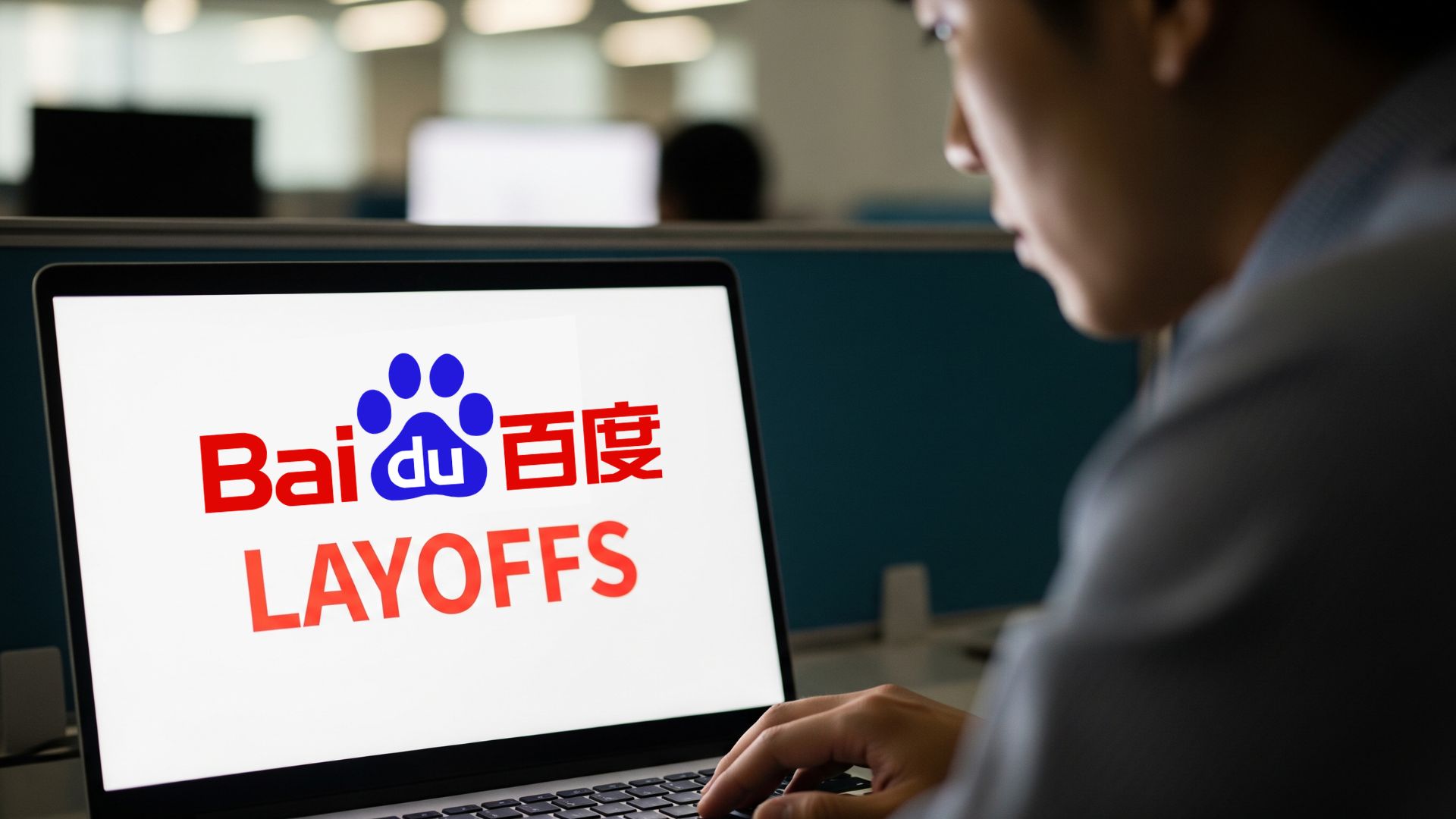
This week, Baidu started massive layoffs across multiple departments after reporting a massive financial loss.
The layoffs, which began this week and are expected to continue through the end of the year, mark one of the company’s largest workforce reductions in recent times.
Baidu Layoffs May Cut Up to 40% of Its Workforce
Baidu hasn’t officially announced the exact number of layoffs, but some teams are seeing cuts as high as 40% of their workforce, according to people familiar with the situation.
Baidu has implemented these major staff reductions across its Beijing, Shanghai, and Guangzhou offices. The company’s Mobile Ecosystem Group (MEG) is bearing the majority of the cuts.
Affected employees are receiving compensation packages that include one month’s pay for each year of service, plus between one and three months of additional salary, according to employees who spoke about their severance agreements.
One employee in Beijing shared that 4 out of 9 people on their team received severance notices this week.
The key reason behind these layoffs is losses. Baidu lost 11.23 billion yuan ($1.59 billion) in the third quarter of 2025.
But the losses weren’t the only bad news. Baidu’s total revenue dropped 7% compared to the previous year, and its online advertising revenue plummeted as well. This marks the second straight quarter of revenue decline for the search engine giant.
Baidu’s traditional search engine and advertising business have been losing users and money for a long time.
People in China are spending more time on social media apps like RedNote and ByteDance’s Douyin (the Chinese version of TikTok) instead of using search engines.
Baidu’s total workforce stood at 35,900 employees at the end of last year. The company has been steadily shrinking for years.
Baidu is Behind in the AI Race
Baidu was actually the first major Chinese tech company to launch a ChatGPT-style AI service back in 2023, called Ernie Bot. Being first should have been a huge advantage, like being the first person to discover a great new video game before it goes viral.
But being first didn’t guarantee success. Baidu’s Ernie is behind ByteDance’s Doubao with 157 million monthly users, and DeepSeek with 143 million monthly users.
The company that was once called “China’s Google” now finds itself struggling to compete against newer rivals.
Despite spending years and billions of dollars investing in AI, Baidu’s efforts haven’t revived growth. The company has tried different strategies, including making Ernie open-source earlier this year, but nothing has helped it regain its early lead against competitors like Alibaba and DeepSeek.
Baidu’s step may serve as a warning to other companies in China’s tech ecosystem.
Bottom Line
Sources familiar with the layoffs at Baidu said that roles tied to AI and cloud computing will largely be protected, with more resources being directed to AI development.
The company previously stated that over half of its mobile search result pages now feature AI-generated content, highlighting its efforts to modernize the user experience.
This means that employees working on traditional mobile services and advertising-related roles are at risk, while those in AI and cloud are somewhat insulated.
What This Means for Your Job Search Strategy
Tech layoffs have reshaped the hiring market, but demand for engineers and product professionals who can work alongside AI tools remains strong at companies actively building in the AI space. If you are affected by cuts at Baidu or concerned about similar moves, this is the time to sharpen your positioning.
Update your portfolio to show projects where you used AI tools to increase output, reduce cycle time, or solve a meaningful problem. This matters more than credentials or tenure. Hiring managers at AI-first companies want to see evidence of adaptability, not just years of experience.
Target companies that are actively building, not just maintaining, and tailor every application to the specific team and product. A brief, specific note explaining exactly why you want to work on that team converts far better than a generic application.
Prepare before interviews begin, not during them. Tools like Interview Copilot give you real-time coaching during actual interviews, and running a practice round with AI mock interview practice helps you sharpen your answers under pressure. In a tight market, preparation is the one variable entirely within your control.
What Affected Employees Should Do Next
Baidu's cuts reflect a broader pattern in Chinese tech: companies that over-hired during the 2020-2022 expansion cycle are now rationalizing headcount against slower-growth revenue. For employees affected, the immediate priority is understanding their severance package and preserving any equity that may vest on departure.
Tech professionals from Baidu carry meaningful credentials in AI infrastructure, search algorithms, autonomous driving software, and cloud computing. These skills are in demand globally, and they transfer well to companies building in similar spaces.
The interview challenge for most displaced Baidu engineers is articulating their work in terms that global hiring managers can evaluate quickly. Large-scale distributed systems experience is rare, but framing matters. Use Interview Copilot to practice explaining technical projects in plain business terms, then sharpen the delivery under realistic time pressure. Most technical interviews allocate 30-45 minutes per problem, and candidates who front-load their thinking visibly before diving into code consistently outperform those who go quiet and deliver a solution without narration.
Many candidates use AI interview preparation to prepare for questions exactly like these.
Frequently Asked Questions
What causes companies to announce mass layoffs?
Companies typically announce mass layoffs when facing revenue shortfalls, rising operating costs, shifts in business strategy, or competitive pressure from automation and AI. Macroeconomic downturns also accelerate these decisions. In most cases, the company is trying to reduce its cost base while reinvesting in higher-growth areas such as technology or new product lines.
What rights do laid-off employees have?
Laid-off employees are generally entitled to severance pay, continuation of health benefits for a set period, and access to unemployment insurance. In the United States, the WARN Act requires employers with 100 or more employees to give 60 days notice before mass layoffs. Always review your employment contract and consult an employment attorney if you have concerns.
How should you update your job search strategy after a layoff?
After a layoff, prioritize updating your resume and LinkedIn profile within the first week. Reach out to former colleagues and managers for references and referrals. Focus on roles that align with your transferable skills and consider upskilling in AI tools relevant to your field. Networking remains the most effective way to land a new role quickly.
How does AI contribute to the rise of layoffs in tech and corporate sectors?
AI is enabling companies to automate tasks that once required large teams, including customer support, data analysis, content creation, and basic software development. As AI tools become more capable, companies reduce headcount in departments where automation delivers equivalent output at lower cost. This trend is accelerating across both tech and non-tech industries.
Table of Contents
Related articles
Cigna to Lay Off 2,000 Workers Worldwide
Cigna announces 2,000 job cuts globally as it restructures operations and tackles higher medical costs in 2026.

Yale Study Finds No Evidence of an AI Jobs Apocalypse Yet
A new Yale study finds no evidence of an AI-driven jobs apocalypse. While AI is changing how we work, the big wave of job losses predicted by tech leaders hasn’t happened yet.

Scale AI Layoffs - Why Meta's $14.3 Billion Investment Led to 200 Job Cuts
Just weeks after a $14.3 billion deal with Meta, Scale AI has laid off 14% of its workers as major customers pulled out over trust concerns.

Apple Layoffs: 200 Cut From Siri and Vision Pro Teams
Apple cut about 200 roles across Siri, Intelligent Systems Experience and the Vision Pro teams on August 21, 2026, with no WARN filing covering them. Here is what was cut and what affected staff should do next.
US Layoffs Reach 153,074 in October, the Highest for the Month in 22 Years
October layoffs in the USA hit 153,074, the highest for the month in 22 years, as AI replaces thousands of workers and total 2025 job cuts pass 1 million.