Can Employers Detect AI Interview Tools? Honest 2026 Risk Guide



Sometimes, but far less often than the fear around this topic suggests. Between July 2025 and January 2026, AI-integrity firm Fabric flagged 38.5% of candidates across 19,368 monitored interviews for suspected AI assistance. That same period showed 61% of companies using AI screening still deploy no real-time overlay detection software. The risk is real and unevenly distributed. Whether it applies to you depends entirely on where you're interviewing and which tool you're using.
Quick Answer
- Most companies, especially startups and mid-market employers, run no real-time AI detection software during interviews. Detection risk concentrates at enterprise-scale employers: large tech firms, investment banks, and consulting firms using tools like Sherlock, Talview, or Phenom.
- Across 816,000+ live Interview CoPilot™ sessions in 2025 and 2026, the most consistent detection pattern is a follow-up question the candidate can't answer, not proctoring software flagging a screen overlay.
- The interview context matters more than the tool. A live coding round on CoderPad at Amazon is a different detection environment than a HireVue one-way video screen at a regional employer. The same tool carries different risk in each.
How AI Detection Software Actually Works, And Where It Fails
The detection tools that exist work through a handful of distinct signals, not a single system that "sees" your screen overlay. Understanding what they actually measure tells you where the real risk sits.
Eye-gaze and head-movement tracking flags candidates who look consistently off-camera at a fixed point. This is the behavioral pattern of someone reading from a side monitor. Tools like Talview and HireVue's integrity layer use webcam analysis to flag unusual eye trajectories. A candidate who glances left repeatedly, reads, looks back, reads again produces a pattern that both trained interviewers and automated systems recognize.
Response timing analysis works against the real-time suggestion model: if every answer begins after a 2-3 second pause and then runs for exactly 90-120 seconds, the pattern is flagged. Human answers vary. They have shorter answers to easy questions, longer answers to hard ones, mid-sentence pauses, redirections. AI-assisted answers often don't.
Network-level monitoring is deployed at a small subset of technically sophisticated employers who run proctoring through a secure browser. In these contexts, new network connections initiated after the interview starts can be flagged. This is rare and mostly confined to assessments on HackerRank, CodeSignal, and Codility where proctoring is built into the platform.
What none of these detect reliably is a properly configured desktop application using GPU-level rendering to stay invisible during screen shares. The stealth mode technology that tools like Interview CoPilot™ use renders at a layer below what standard screen capture picks up. That is by design. If you want to understand what your answer patterns actually look like to reviewers before going into a real session, AI Mock Interview lets you rehearse and review in a low-stakes environment first.
The gap matters. If the detection tools don't catch the overlay, what does? The answer is interviewers.
What Actually Gets Candidates Caught
In practice, here is what happens across real interviews: the candidate uses an AI tool, gets through the initial answer, then gets one follow-up question they can't answer from memory. "Walk me through the tradeoffs you mentioned." "What would you change if the dataset was 10x larger?" "Why that approach specifically?"
The AI's first answer looks clean. The follow-up exposes the problem. The candidate pauses too long, gives a vague non-answer, or contradicts something they said 90 seconds earlier.
That is the real detection mechanism. Not Sherlock. Not eye-tracking. A hiring manager who asks one extra question.
Across 816,000+ Interview CoPilot™ sessions in 2025 and 2026: the candidates who report detection incidents almost universally describe a content failure, not a technical one. The overlay worked exactly as designed. The follow-up they weren't ready for is what ended the conversation.
This has a direct implication for how you think about risk. The question isn't only "will the software catch me?" It's also: "am I prepared to defend and extend every answer the AI gives me?" If yes, meaning you know the domain deeply and the AI's suggestions are confirming things you already know, the risk profile looks different than if you're using it to generate answers in a domain you don't understand.
Stealth Mode: What It Does and What It Doesn't Prevent
Interview CoPilot™ uses GPU-level rendering to keep the overlay invisible during screen shares in standard Zoom, Google Meet, and Teams calls. In unproctored environments, the overlay does not appear in screen capture. The tool runs through the desktop app, and the interface remains hidden from the video feed even when you share your screen for technical rounds.
In proctored assessment platforms (HackerRank or CodeSignal in proctored mode), the platform can log that a new application was opened but cannot see what the overlay shows. The content of the overlay is never visible to the proctoring system.
What stealth mode does not prevent is behavioral detection. If your answer timing is robotic, if your eye movements follow a fixed pattern, if you cannot engage naturally on follow-up questions, those signals are visible to any attentive interviewer regardless of what technology is in use. Preparation before the live session is still the primary risk reduction mechanism. See how to pass an AI screening interview for how automated first-round systems score response patterns specifically.
Which Companies Use Real-Time Overlay Detection in 2026
Detection risk is not uniform across employers. Here is the realistic breakdown by employer category based on publicly reported tool adoption.
Enterprise tech (FAANG and equivalent): Amazon uses behavioral analysis during technical screens and has redesigned its onsite loop to require candidates to explain and extend every answer. Google runs integrity monitoring on its HackerRank assessments. Meta explicitly allows AI tools in designated interview rounds introduced in late 2025, while traditional coding rounds still run with behavioral monitoring. Apple uses in-person technical rounds for most roles, where overlay detection is physically impossible.
Investment banking and financial services: Goldman Sachs and JPMorgan deploy HireVue with behavioral monitoring for first-round screens. Goldman's cognitive assessment uses a locked browser environment. The proctored environment blocks most overlay apps at the platform level rather than through software detection of the specific application.
Management consulting: McKinsey, BCG, and Bain run case interviews that are structurally AI-resistant. Case interviews require real-time calculation, logical pivoting, and dialogue that a real-time suggestion system cannot keep pace with. Detection tools are largely irrelevant here because the format itself catches AI assistance through natural conversation dynamics.
Mid-market SaaS and startups: Most companies in this tier run Zoom or Google Meet interviews with no proctoring whatsoever. If they use a platform at all for technical assessment, it is usually CoderPad or Replit. Neither deploys overlay detection by default. Whether detection is theoretically possible is irrelevant when no detection infrastructure is present. For candidates worried about a specific employer, the useful question is: "Does this company use a proctored assessment platform, and do they have a stated AI policy?"
Detection Risk by Interview Format
Format is the most underanalyzed dimension of this question. The same AI tool carries meaningfully different risk across different interview structures.
HireVue and one-way video screens: Low technical detection risk, but high behavioral detection risk. HireVue analyzes response patterns including timing. An answer that begins exactly 3 seconds after the question appears and runs for exactly 90 seconds with no variation across 5 questions is flagged. The overlay is rarely captured in these platforms, but the answer pattern often is.
Live coding on HackerRank or CodeSignal: Higher technical detection risk. Both platforms offer proctored modes that some employers activate, which include tab monitoring, copy-paste detection, and in some configurations network connection logging. Whether your specific interview run uses proctoring mode depends on employer settings that candidates rarely know in advance.
Live Zoom or Google Meet behavioral interviews: Lowest detection risk of any format. No proctoring infrastructure, no screen capture by default, no behavioral analysis tooling. Detection at the technical level is essentially impossible unless the interviewer sees something directly on your screen. The risk is entirely about follow-up question readiness.
In-person onsite interviews: Zero technical detection risk. The overlay can't run on an interviewer's laptop. The risk is 100% about content, whether you know the material well enough to discuss it conversationally without assistance. Browse interview tips and strategies for in-person preparation approaches.
How to Use AI Tools With Lower Risk
This section is about reducing real risk, not evading oversight. Using Interview CoPilot™ to confirm and structure answers you already know is a different activity than using any AI tool to generate answers in a domain you don't understand. The first is a performance aid. The second is misrepresentation.
Three things that consistently reduce both detection and failure risk:
- Know the material before you use the tool. Every answer the AI gives you should be something you could defend and extend without assistance. If the AI's suggestion surprises you, that is a signal to study, not to deliver it verbatim. Review the AI's suggested answer before delivering it. If you can't improve or expand it on your own, you are not ready to answer that question.
- Vary your response structure. If every answer is 90 seconds, starts immediately, and follows the same STAR structure, it is flagged by both humans and automated systems. Allow for occasional one-sentence answers. Genuine thinking out loud. Natural variation in answer length.
- Prepare for the follow-up, not just the initial answer. The actual detection risk in most interviews is a single follow-up question. Spend more prep time practicing extended discussions from AI-suggested answers than practicing the initial answer itself.
The breakdown of which AI interview tools minimize detection risk by format covers the technical implementation differences across tools, including GPU-layer rendering and which platforms each has been tested against. For the question of where the ethical line actually sits, see the discussion on whether using AI during job interviews is cheating.
Candidates in the AI for job interviews community have shared real experiences with detection questions at specific companies. Join the discussion on AI interview tools in practice to read real candidate accounts and ask questions about specific interview contexts.
Author's Note
From Jaya Muvania
Most candidates I speak with wildly overestimate the chance that software will catch them and underestimate the chance that a follow-up question will. Across every real interview story I've heard, candidates who had trouble weren't caught by Sherlock or Talview. They were caught by a hiring manager who asked one extra question. That's the risk worth preparing for. Use Interview CoPilot™ to practice in depth before the session, so that every answer it surfaces during the real interview is something you genuinely already know.
Frequently Asked Questions
Can employers detect Interview CoPilot™ specifically?
Interview CoPilot™ uses GPU-level rendering to stay invisible during screen shares in standard Zoom, Google Meet, and Teams calls. In unproctored environments, it does not appear in screen capture. In proctored assessment platforms, the platform can log new network connections but cannot see the overlay itself. The primary detection risk is behavioral, not technical detection of the application.
What percentage of companies use AI detection software in interviews?
61% of companies using AI screening report no real-time overlay detection capability, according to Greenhouse's 2026 hiring survey. Detection tools are primarily deployed by enterprise-scale employers: large tech firms, investment banks, and consulting firms. Most mid-market and startup employers run live video interviews with no proctoring infrastructure.
What happens if an employer thinks you used AI?
Most employers ask targeted follow-up questions designed to probe whether you can defend and extend your answer. If you can't, the interview ends and you're marked as a no-hire. Formal blacklisting happens at a minority of companies. Amazon has a documented 12-month reapplication block for integrity violations. Most rejections linked to suspected AI use are logged as failed performance, not formal integrity incidents.
Is it cheating to use AI during a job interview?
It depends on the employer's stated policy for the specific interview round. In 2025 and 2026, several major employers including Meta, Canva, Shopify, and Coinbase explicitly allow AI tools in designated interview rounds. In rounds where AI is not permitted, using it violates the employer's stated terms and crosses into misrepresentation. Check the specific policy for the specific round you're interviewing in.
Does stealth mode actually work?
In standard unproctored video interviews (Zoom, Google Meet, Teams), GPU-layer stealth rendering prevents the overlay from appearing in screen captures. The technology works as designed for these environments. In platform-proctored assessments with locked browsers, the platform can detect a new application was opened but cannot see what it shows. Behavioral detection is not prevented by stealth mode. See the STAR method glossary page for how answer structure affects both quality and behavioral analysis scores.
Related Interview Guides
- Cluely Review in 2026: Pros, Cons and How It Compares: How Cluely's detection risk profile compares to Interview CoPilot™ for candidates evaluating real-time tools.
- Do Companies Allow AI Interview Assistants?: Which employers have public AI policies and what using a tool looks like when the rules explicitly permit it.
- 9 Common Mistakes Candidates Make With AI Interview Assistants: The behavioral patterns that get candidates caught even when the technology is working correctly.
- 5 Best LockedIn AI Alternatives in 2026: Alternative tools for candidates who want to compare detection risk profiles and features across the real-time interview AI market.
Table of Contents
Related articles
The Hardest Tech Interview Questions in 2026 (And Why Candidates Keep Failing)
Which tech interview questions trip up even strong candidates? Final Round AI's analysis of 500,000+ sessions reveals the hardest questions by retry rate — and how to answer them.
Interview Preparation Tips That Actually Work
Interview preparation tips built around a 7-day plan: company research, STAR story bank, mock interviews, logistics prep, and post-interview follow-up strategy.
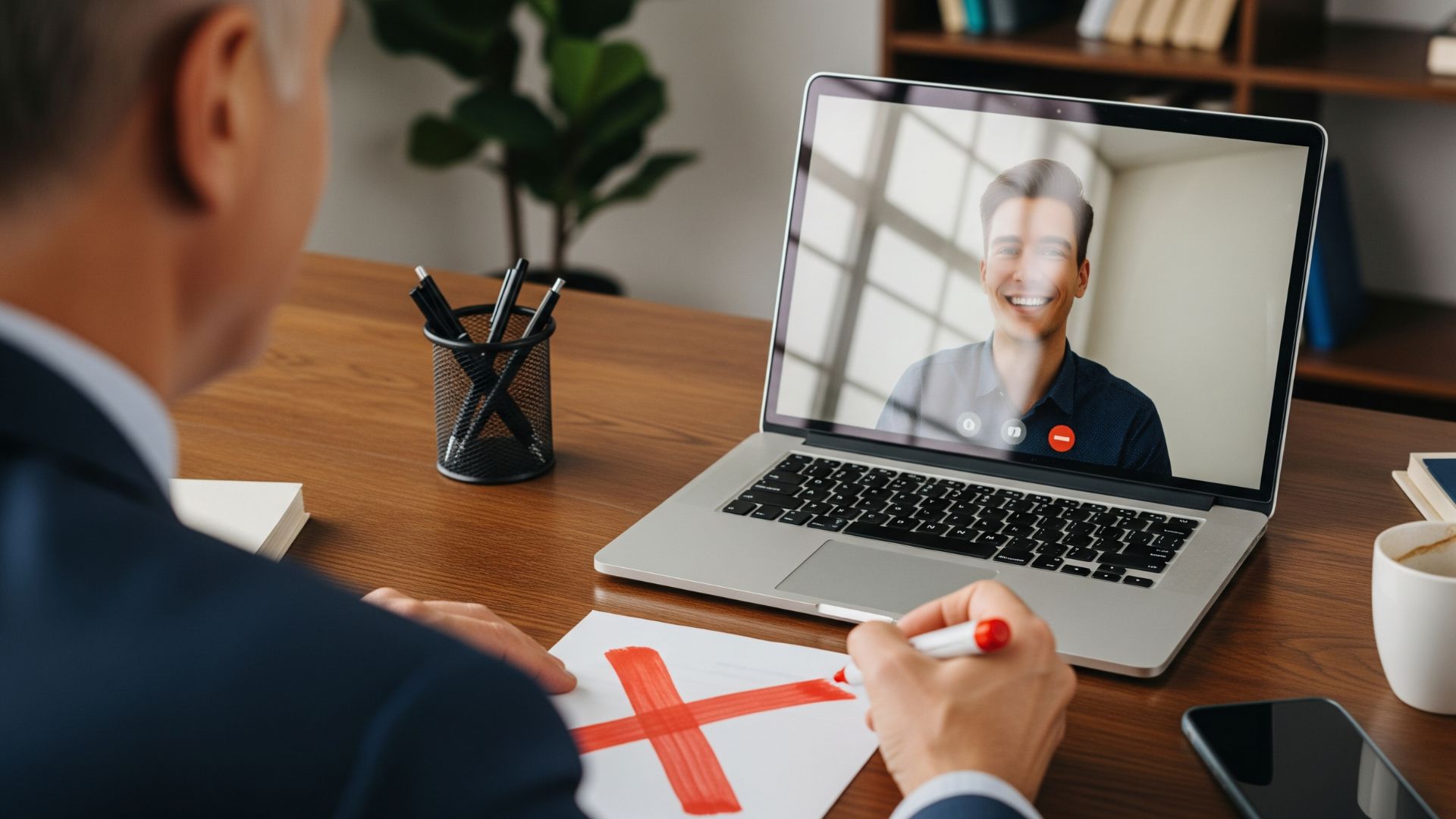
10 Signs You Will Not Get the Job Offer
Think your interview went wrong? Here are the clear signs you will not get the job offer and what you can do to avoid the same mistakes next time.
Interview Solver Review: Pros, Cons, and Verdict for 2026
Interview Solver Review: Pros, Cons, and Verdict for 2026