BBC Layoffs Have Begun with 550 Job Cuts



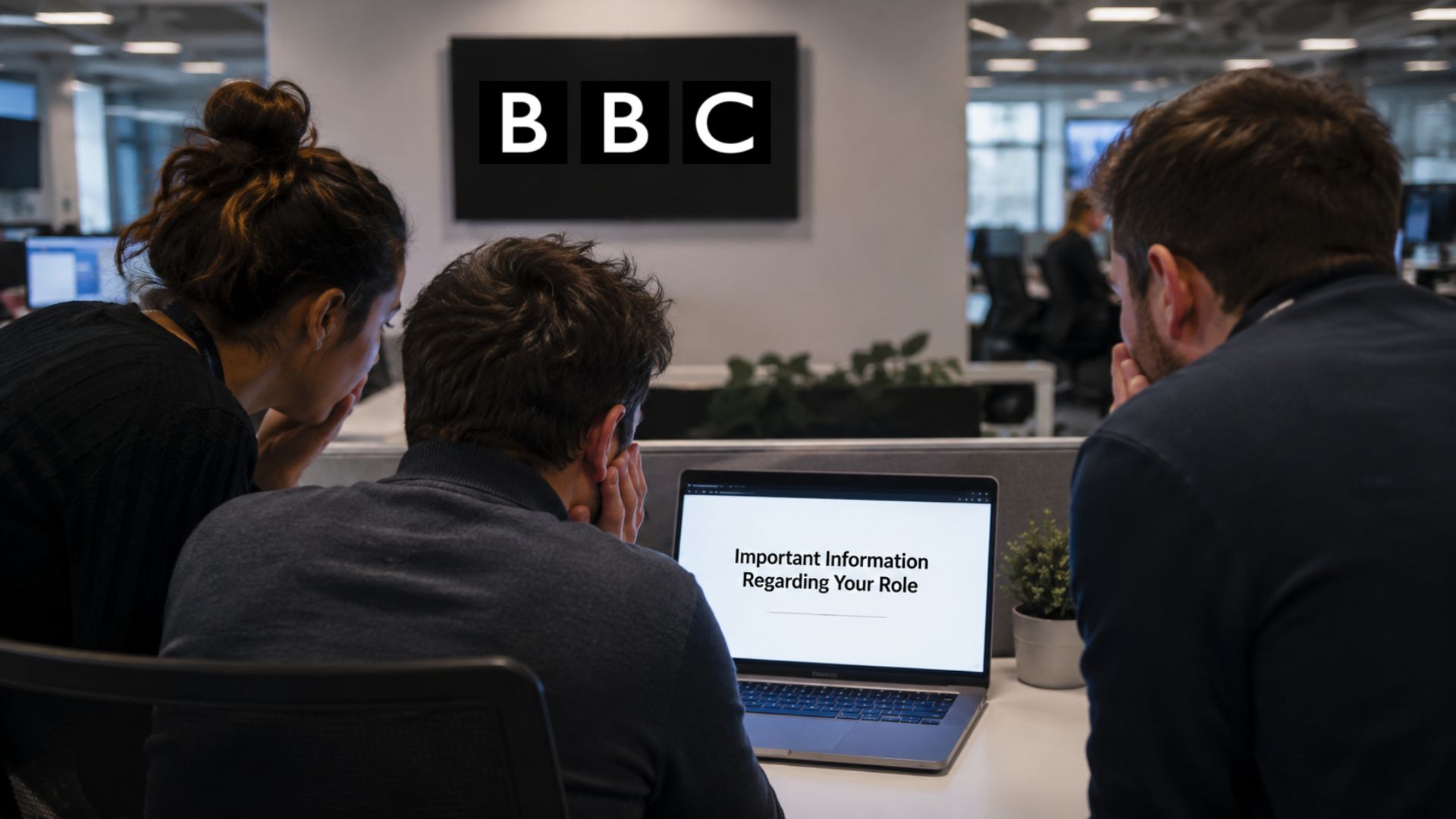
The BBC plans to eliminate around 550 jobs immediately across news, nations, and content divisions.
Over the broader restructuring programme, the corporation expects 2,000 jobs to be cut across the organisation.
BBC Layoffs Have Just Started
Britain's most iconic broadcaster is now officially in cost-cutting mode.
On June 17, 2026, new BBC Director General Matt Brittin sent a memo to staff. Brittin, a former Google executive who took over the role last month, announced that 550 roles would be eliminated across the News, Nations, and Content divisions by the start of the 2027-28 season, while the amount spent on commissioning new programmes would be cut by £80 million.
But that 550 is just the beginning. Total job losses are expected to reach between 1,800 and 2,000 over the next three years, and further cuts of around 700 corporate division jobs are still to be announced in the coming months.
The cuts are spread across three main divisions:
- BBC News is reducing its workforce by 200 roles, with a goal of cutting at least £51 million in costs by April 2027.
- BBC Nations will contribute £33 million in savings by the end of 2027-28 and expects to lose around 250 jobs.
- In the Content division, the target is to save a minimum of £100 million by the end of 2027-28, with original programming set to shrink by 100 to 150 hours.
Several podcasts produced by BBC World Service will shut down before the end of 2026: "The Inquiry," "The Conversation," and "The Fifth Floor." Radio 4's "The World Tonight," which has aired since 1970, will be taken off air.
The BBC will also review some television and radio channels and further focus on digital-first distribution. Senior leaders will be reduced by 10%, and additional cost-cutting measures will be announced in the coming months.
The BBC has roughly 21,500 employees. Losing 2,000 of them means approximately 10% of the workforce will be gone when the full restructuring is complete.
Why Is This Happening?
The short answer is falling revenue. The longer explanation is that the media landscape has shifted in ways that undercut the BBC's traditional income model.
The BBC is facing a battle to stay relevant as viewers, particularly younger audiences, move to streaming services and other digital platforms. Netflix, Disney+, and YouTube have eaten into the BBC's audience for years. Fewer people are watching traditional TV, and that matters because the BBC still depends heavily on the licence fee.
The number of households paying the licence fee has fallen by around 300,000 year-on-year, reflecting both rising evasion rates and a growing shift toward streaming. The BBC's licence fee peaked at 26.2 million payers in 2018, and it has been sliding ever since.
That declining income, combined with rising production costs, has forced the BBC into a painful savings drive. Brittin's overarching goal is to shave £500 million off spending over the next three years.
In his June 17 memo, Brittin wrote:
"We live in very uncertain times. Our audiences rely on us every day to keep them informed, entertained, and equipped to make sense of the world. Making savings while fulfilling our mission means a doubly difficult time for everyone."
That sentence captures the bind the BBC is in. It cannot stop being a public broadcaster, but it also cannot keep spending money it no longer has.
What Affected BBC Employees Should Do Next
Media industry layoffs hit differently from tech layoffs. Roles in journalism, content production, and broadcast operations are specialized, and the market for them outside the BBC is narrower. If you were affected by the BBC restructuring, a few things matter right now.
First, do not wait on the broader media job market to open up before preparing for interviews. Companies in digital media, streaming, and content strategy are hiring, and they use structured interview processes that reward preparation. Final Round AI's Interview CoPilot™ works in real time during live interviews, giving you live coaching on behavioral and situational questions as they come up. If you want to practice before your first interview, AI Mock Interview lets you run through role-specific questions drawn from actual interview data across media, operations, and content roles.
Second, update your resume to reflect specific outputs rather than responsibilities. At the BBC, that means citing programmes you contributed to, audiences reached, cost reductions achieved, or editorial decisions made. Specificity wins interviews.
Bottom Line
The BBC is not the only media giant in trouble. Across the Atlantic, CBS News recently announced plans to cut 15% of its workforce, and The Washington Post laid off a third of its staff earlier this year. Closer to home, Channel 4 confirmed 340 job cuts in September 2026, about 28 percent of its workforce and the deepest round in the broadcaster's 43-year history. The media industry broadly is being squeezed from all sides: falling ad revenue, rising production costs, and the continued shift to on-demand streaming.
For BBC workers caught in this restructuring, the path forward runs through the same place it always does: being better prepared for the next interview than the competition.
Frequently Asked Questions
Why is the BBC laying off workers?
The BBC is laying off workers because its primary funding source, the TV licence fee, is declining as more households switch to streaming services. The number of licence fee payers has dropped by around 300,000 year-on-year. With revenue falling and production costs rising, new Director General Matt Brittin has set a target of cutting £500 million in spending over three years.
How many jobs is the BBC cutting?
The BBC is cutting 550 jobs immediately across its News, Nations, and Content divisions. Total job losses across the organisation are expected to reach between 1,800 and 2,000 over the next three years, with a further 700 corporate roles still to be announced. That represents roughly 10% of the BBC's total workforce of approximately 21,500 employees.
What happened to BBC employees?
BBC employees in the News, Nations, and Content divisions received notification in June 2026 that 550 roles would be eliminated by the start of the 2027-28 season. Senior leaders will be reduced by 10%. Several BBC World Service podcasts will be shut down, and Radio 4's "The World Tonight" will be taken off air after more than 50 years. Affected employees are entitled to standard UK redundancy terms.
What should I do if I was laid off from the BBC?
If you were laid off from the BBC, start by reviewing your redundancy package and filing for Universal Credit if needed. Then update your resume to highlight specific editorial or production outputs rather than general responsibilities. Digital media companies, streaming services, and content strategy agencies are all hiring from broadcast backgrounds. Use AI Mock Interview to practice for interviews with questions specific to media and content roles before your first screen.
For the full picture of 2026 tech layoffs and how to navigate them, see our running tracker of every major tech layoff in 2026.
Candidates who use AI interview help to practice before the real interview typically feel more prepared and confident going in.
Related Interview Guides
- How to Land a Tech Job After a Layoff - A step-by-step guide for job seekers re-entering the market after a workforce reduction.
- How to Stay Motivated During a Long Tech Job Search - Practical strategies to keep momentum when the search takes longer than expected.
- How Long Does a Job Search Take - Real timelines from offer data so you know what to expect.
- Is AI Replacing Jobs - What the data says about which roles are most at risk and which are growing.
Table of Contents
Related articles

Nvidia CEO says AI will change Every Job and Make Workers Busier than Ever
AI won’t give workers more free time warns Nvidia CEO Jensen Huang Instead it will transform every job and make survivors busier than ever.

"Godfather of AI" Geoffrey Hinton Says Tech Investment Can't Pay Off Without Destroying Jobs
Geoffrey Hinton says tech companies investing trillions in AI can only make money by eliminating human jobs.

HP to Lay off 6,000 Employees in Major AI-Driven Restructuring
HP plans to cut up to 6,000 jobs by 2028 to support its shift toward AI and ave $1 billion through this multi-year restructuring.

UBS Layoffs Will Cut 10,000 Jobs Worldwide in 2 Years
UBS plans to cut 10,000 jobs worldwide by 2027 as part of a major restructuring aimed at reducing costs.

These Are the 1.3 Million New Tech Jobs Created by AI
AI created 1.3 million new collar jobs between 2023 and 2025 per LinkedIn's 2026 report. Data annotator, AI engineer, head of AI — here's what pays what and how to qualify.
Satya Nadella Resumes Hiring at Microsoft — With an AI Skills Requirement
Microsoft is hiring again under Satya Nadella's AI transformation push. Learn what AI skills Microsoft now requires, which roles are open, and how to position your resume.