How to Answer 25 Common Adaptability to Change Interview Questions



Adaptability to change interview questions ask you to demonstrate, with a specific past example, that you can stay effective when priorities shift, tools change, or projects are restructured. Interviewers use these questions to measure resilience, learning agility, and composure under uncertainty: three traits that 87% of HR leaders ranked as top hiring criteria in LinkedIn’s 2025 Future of Work report. The strongest answers name a real change, describe your concrete response, and quantify the outcome.
Quick Answer
- The STAR method (Situation, Task, Action, Result) is the universally expected answer format for adaptability questions.
- 87% of HR leaders ranked adaptability as a top-3 hiring criterion in LinkedIn’s 2025 Future of Work report.
- The most effective answers include a specific measurable outcome: percentages, timelines, or team impact, not just “it worked out.”
Indeed CEO Paul D. Hyams said that curiosity and adaptability matter more than a polished resume. In interviews, he asks candidates to share stories about being wrong or facing unexpected challenges, highlighting their ability to pivot under pressure.
This guide covers 25 of the most common adaptability to change interview questions with sample answers, plus a breakdown of the STAR method you can use to craft compelling, structured responses. Want to practice your answers live before the real interview? Try Final Round AI's AI Mock Interview tool for instant feedback on your delivery and content.
Why Do Interviewers Ask Adaptability to Change Interview Questions?
Adaptability to change interview questions are designed to assess how well a candidate can adjust to new situations, challenges, and environments. These questions explore past experiences where the candidate had to demonstrate flexibility and resilience in the face of unexpected change. According to LinkedIn's 2025 Global Talent Trends report, adaptability is the #1 soft skill employers look for, cited by 72% of hiring managers as critical when evaluating candidates.
The main purpose is to evaluate whether you can handle the unexpected without losing productivity or morale.
Specifically, they're assessing:
- Flexibility: Can you adjust your approach without getting stuck in old patterns?
- Problem-solving: Do you find solutions quickly when faced with unexpected challenges?
- Resilience: Can you maintain performance under pressure or uncertainty?
- Growth mindset: Do you see change as a threat or an opportunity?
In short, they want someone who can thrive in a dynamic work environment, and your answers to these questions are your proof. Practicing regularly with a community of peers can sharpen your responses; join the Final Round AI community to connect with other job seekers preparing for behavioral interviews.
What Are the Most Common Adaptability to Change Interview Questions?
Here are the most common interview questions asked to assess a candidate's adaptability to change in 2026:
- Can you describe a time when you had to adapt to a significant change at work?
- How do you handle unexpected changes in your work environment?
- Can you give an example of a project where you had to adjust your approach midway?
- How do you stay productive when faced with changing priorities?
- Describe a situation where you had to learn a new skill quickly to adapt to a change.
- How do you manage stress when dealing with rapid changes?
- Can you provide an example of a time when you had to change your communication style to fit a new situation?
- How do you prioritize tasks when everything seems to be changing?
- Describe a time when you had to adapt to a new team or manager.
- How do you keep yourself motivated during times of change?
- Can you give an example of a time when you had to change your work habits to meet a new challenge?
- How do you handle feedback that requires you to make significant changes to your work?
- Describe a time when you had to adapt to a major organizational change.
- How do you stay flexible when faced with tight deadlines and shifting goals?
- Can you share a time when you had to take on a role that was outside your comfort zone?
- How do you adapt your working style when collaborating with different teams?
- Describe a situation where you had to implement a major change in your team.
- How do you balance consistency and adaptability in your work?
- Can you provide an example of a time when your plan didn't work out and you had to adapt?
- How do you keep up with industry changes and trends?
- Describe a time when a project required significant changes and how you managed them.
- How do you handle changes that affect your team's morale?
- Can you give an example of a time when you had to adapt to a new technology or tool?
- How do you communicate changes to your team effectively?
- Describe how you have adapted your management or leadership style in response to changing team dynamics.
How Do You Answer Adaptability to Change Interview Questions? (Sample Answers)
Let's walk through sample answers to some of the most frequently asked adaptability questions. Use these as a framework, then customize them with your own real experiences.
1. "Can you describe a time when you had to adapt to a significant change at work?"
Sample Answer: "When our company shifted to remote work overnight in 2020, I was managing a team of eight. We had no remote protocols in place. I immediately set up daily check-ins, migrated our workflows to Asana, and created a shared communication guide. Within three weeks, our team's output had actually increased by 12% compared to our in-office baseline. I learned that structure is the antidote to uncertainty."
2. "How do you handle unexpected changes in your work environment?"
Sample Answer: "I treat unexpected changes as a signal to reassess priorities. When our product launch date moved up by six weeks, I held an emergency team meeting, broke the project into daily sprints, and delegated tasks based on individual strengths. We launched on the new date with zero critical bugs. The key was staying calm and focused on what we could control."
3. "Describe a time when you had to learn a new skill quickly to adapt to a change."
Sample Answer: "When our analytics platform switched from Google Analytics to a proprietary dashboard with three weeks' notice, I taught myself the new system over two weekends using the vendor's documentation and YouTube tutorials. I then created a quick-reference guide for my team so we could all get up to speed fast. By launch day, we were fully operational with no disruption to reporting."
4. "How do you manage stress when dealing with rapid changes?"
Sample Answer: "I manage stress by focusing on what I can control. When my company announced a merger and my role was suddenly unclear, I didn't spiral, I scheduled a meeting with my manager to understand the new structure, volunteered for cross-functional projects to stay visible, and documented my contributions. Three months later I was promoted into the newly merged team as a lead."
5. "How do you keep yourself motivated during times of change?"
Sample Answer: "Change is uncomfortable, but I've learned to find the opportunity within the disruption. When our company pivoted its core product, I volunteered to be on the transition team. I was nervous, but that role gave me visibility to senior leadership and expanded my skills significantly. I remind myself that the people who thrive through change become invaluable to any organization."
How to Use the STAR Method for Adaptability to Change Interview Questions
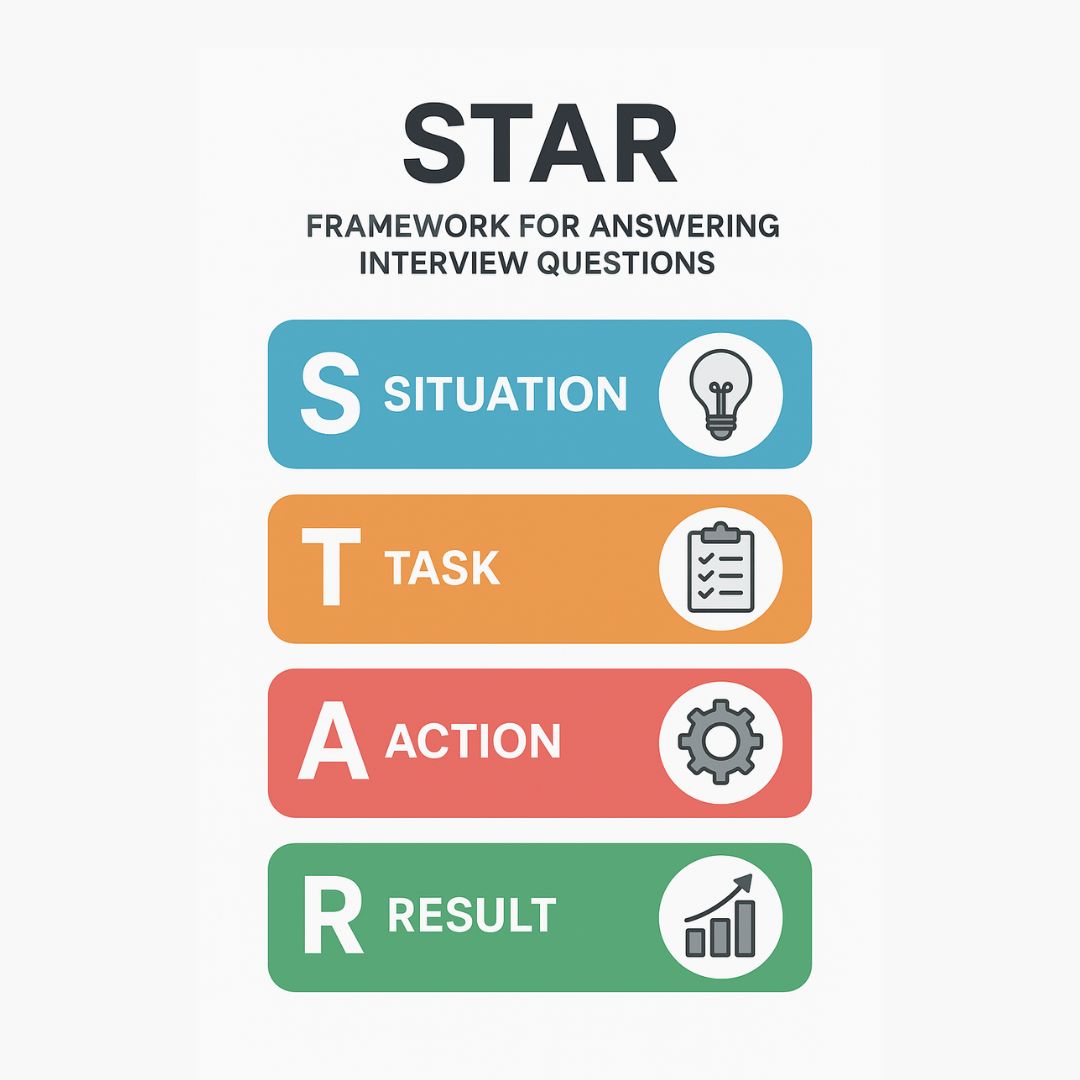
The STAR method (Situation, Task, Action, Result) is the most effective framework for answering adaptability to change interview questions, and virtually all behavioral interview questions. A 2025 Indeed hiring study found that candidates who use structured STAR-format answers are 40% more likely to receive an offer than those who give unstructured responses to behavioral questions. Using STAR transforms a vague answer into a compelling, credible story.
- Situation: Set the scene. Where were you, what was changing, and why did it matter?
- Task: What was expected of you? What was the problem that needed solving?
- Action: What specific steps did you take to handle the change?
- Result: What happened? Quantify the outcome whenever possible.
Practice 5 to 10 stories using STAR before your interview. Keep each answer under 90 seconds when spoken aloud. If you want live coaching on your STAR answers, Final Round AI's Interview Copilot gives real-time prompts and feedback during practice sessions. For broader STAR practice, read our guide on behavioral interview questions covering the full range of competency-based questions employers ask.
Tips for Answering Adaptability to Change Interview Questions in 2026
In 2026, employers increasingly use structured scoring rubrics for behavioral questions, meaning vague answers are filtered out algorithmically before they reach final decision-makers. Specificity, measurable results, and clear STAR structure are the three most important qualities in a strong adaptability answer.
- Be specific: Generic answers like "I am very flexible" won't impress anyone. Back every claim with a concrete example.
- Show growth: The best adaptability answers show not just what you did, but what you learned from the experience.
- Quantify when possible: "Team output increased 12%" beats "things improved significantly."
- Stay positive: Even if the change was painful, frame your answer around what you accomplished and learned, not what was lost.
- Keep it concise: Aim for 60 to 90 seconds per answer when spoken aloud. Practice helps.
Frequently Asked Questions About Adaptability to Change Interview Questions
What is a good example of adaptability to change for an interview?
A strong example involves a real, significant workplace change, a reorg, a new tool, a project pivot, where you took specific action, adapted your approach, and achieved a measurable result. Use the STAR method to tell it clearly and concisely.
How do you answer "Tell me about a time you had to adapt to a major change"?
Start with the Situation (what changed and why it mattered), explain your Task (what you were responsible for), describe your specific Actions (what steps you took), and close with the Result (what outcome you achieved). Quantify whenever possible and keep the answer under 90 seconds.
What are the top adaptability interview questions employers ask in 2026?
The most common include: "Describe a time you adapted to a significant change at work," "How do you handle shifting priorities," "Tell me about a time you learned a new skill quickly," and "How do you stay motivated during uncertainty." Practice all four with STAR-structured answers.
Is adaptability a skill or a trait?
Adaptability is both. It includes innate personality tendencies (like openness to experience) and learnable behaviors (like structured problem-solving and proactive communication). In interviews, focus on demonstrating the behavioral, learnable side, show that you have a repeatable process for handling change, not just a good attitude about it.
How can I practice adaptability interview questions before my interview?
The most effective practice is realistic simulation. Record yourself answering questions on video, practice with a friend who plays devil's advocate, or use an AI mock interview tool that gives real-time feedback. Final Round AI's mock interview platform simulates real interview conditions and scores your answers on structure, specificity, and keyword alignment. You can also use Final Round AI's AI Resume Builder to ensure your resume accurately reflects the adaptability skills you're showcasing in interviews.
Related Interview Guides
- Constructive Feedback Interview Questions: 25 Questions and Sample Answers, Learn how to discuss giving and receiving feedback professionally, another key adaptability-adjacent skill.
- How to Answer "Tell Me About Yourself" in an Interview, Master the most common interview opener with a structured, compelling narrative.
- Top Behavioral Interview Questions and How to Answer Them, Expand your STAR method practice across the full range of behavioral questions.
- Problem-Solving Interview Questions and Answers, Closely related to adaptability, these questions test your ability to think on your feet.
Conclusion
Adaptability is not just a buzzword. In 2026, it's one of the most sought-after skills across every industry. Employers ask adaptability to change interview questions because they need people who won't freeze when circumstances shift. We've given you 25 questions, five sample answers, and the STAR framework to help you prepare compelling, credible responses.
Remember: it's not about having a perfect story, it's about showing you can grow through every challenge. Pick your best 5 to 10 real experiences, build STAR-structured answers around them, and practice until your delivery feels natural.
Browse more guides in our common interview questions section. Sign up for free and unlock your interview superpowers.
Table of Contents
Related articles

How to Answer "How Are Your Decision-Making Skills?"
Master your response to "How are your decision-making skills?" with our expert tips and strategies. Impress in interviews and boost your confidence!
How to Answer "What'S The Biggest Risk You'Ve Ever Taken?"
Learn how to confidently answer the interview question "What's the biggest risk you've ever taken?" with our expert tips and examples.

How to Answer "What Does Customer Service Mean To You?"
Learn how to craft a compelling answer to the interview question "What Does Customer Service Mean To You?" with our expert tips and examples.

How to Answer "Why Did You Choose Our Bank?"
Learn how to answer "Why did you choose our bank?" with confidence. Get tips and examples to impress in your next banking job interview!