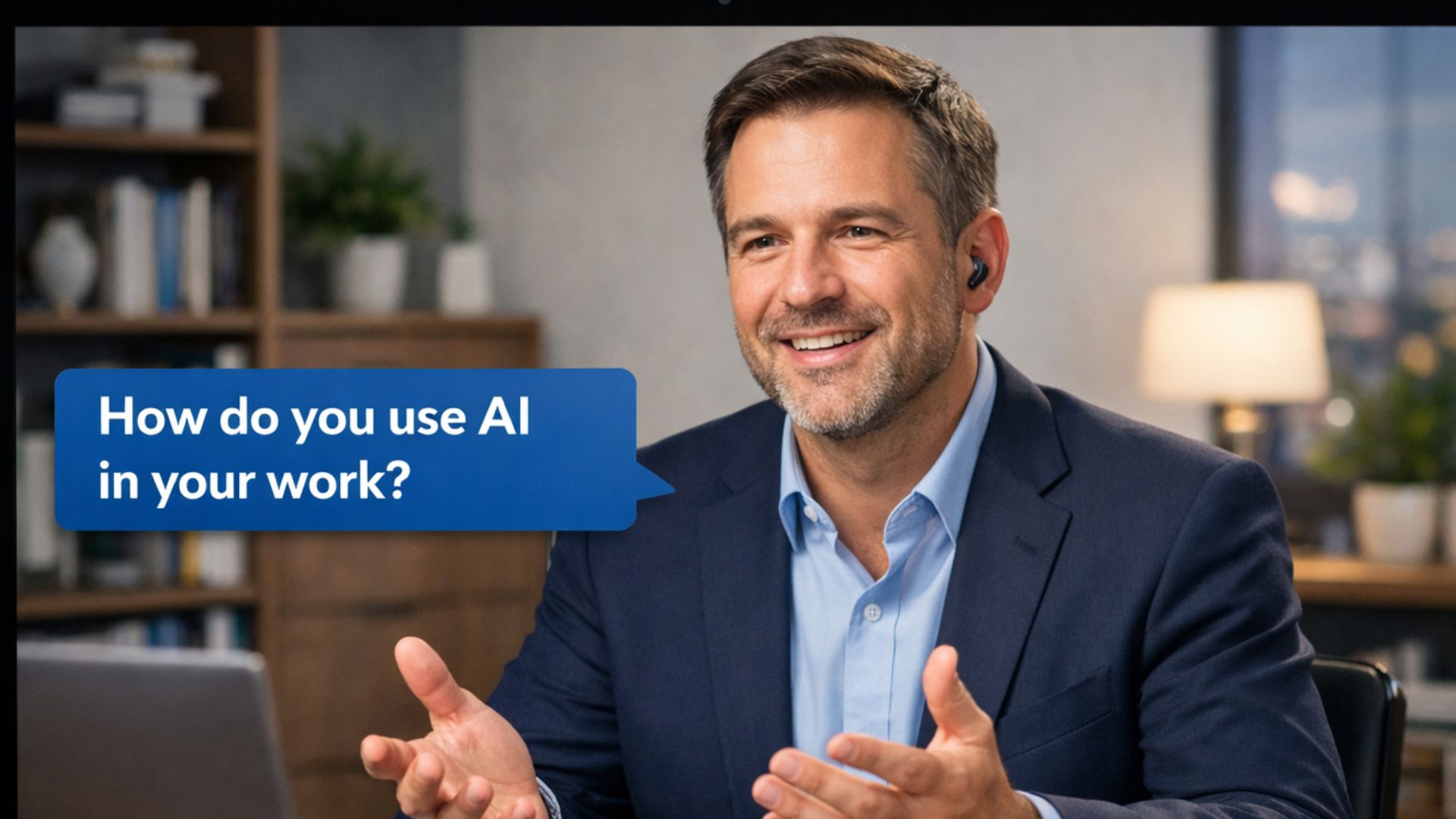


The best answer to the "who are you" interview question is a 60-90 second professional summary: your current role or background, two or three relevant strengths backed by results, and a clear reason you want this specific position. Keep it focused on what the interviewer actually needs to know, not a life story.
Quick Answer
- Structure your response as: current background + top 2-3 relevant strengths + why this role.
- Keep it under 90 seconds. Glassdoor research shows interviewers form first impressions within the first 90 seconds of a response.
- Tailor every answer to the job description. Generic answers rank last among hiring managers surveyed by LinkedIn in 2025.
Why Do Interviewers Ask "Who Are You?"
Interviewers ask this question to assess three things at once: your self-awareness, your communication style, and your fit for the role. It is not a casual icebreaker. Hiring managers use your opening answer to calibrate how much time to spend on deeper questions. A weak answer signals poor preparation; a strong one signals confidence and clarity.
According to a 2025 LinkedIn Talent Trends report, 87% of hiring managers say a candidate's ability to articulate their professional identity in the first two minutes influences the overall evaluation. The "who are you" question is that first two minutes.
How Should You Structure Your Answer?
The most effective structure is three parts: background, strengths, and fit. Background means your current or most recent role and the domain you work in. Strengths means two or three specific skills or accomplishments directly relevant to this job. Fit means a single sentence explaining why this company or role is the logical next step for you.
Avoid starting with "I was born..." or "Ever since I was a kid..." Interviewers are not asking for your autobiography. They want to know what you bring to their team today. Use Final Round AI's Interview Copilot to practice this structure with real-time feedback before your next interview.
What Is the Ideal Length for a "Who Are You" Answer?
Sixty to ninety seconds is the target length. That is roughly 150 to 225 words spoken at a natural pace. A 2026 hiring survey by Glassdoor found that answers longer than two minutes caused interviewers to mentally disengage in 74% of cases. Shorter is almost always better, provided every sentence carries weight.
If you are practicing on your own, record yourself and count the seconds. Most candidates who think they are being concise are actually running 2.5 to 3 minutes. Use AI Mock Interview to get objective feedback on your answer length and delivery.
What Should You Actually Say About Yourself?
Lead with your professional identity, not your personality. "I am a software engineer with four years of experience building distributed systems at mid-size fintech companies" is a strong opener. "I am a hard worker who loves challenges" is not, because every candidate says the same thing.
Back every claim with a number or a named outcome. Instead of "I improved team performance," say "I reduced our deployment cycle from two weeks to three days by introducing automated testing." According to a 2025 Indeed report, candidates who quantify at least one achievement in their opener are 38% more likely to advance to the next round.
Sample Answers by Role
Software Engineer
"I am a backend engineer with five years of experience in Python and distributed systems, most recently at a Series B fintech where I led the migration of our payments API to a microservices architecture. That project cut average latency by 40%. I am looking for a role where I can work at a larger scale and contribute to infrastructure decisions from day one, which is exactly what this position describes."
Marketing Coordinator
"I have spent three years in B2B content marketing, focused on SEO and demand generation for SaaS companies. In my current role I grew organic traffic from 12,000 to 85,000 monthly sessions over 18 months. I want to bring that same growth-focused approach to a team building in the AI space, which is why this role stood out to me."
Sales Associate
"I have four years of retail and inside sales experience, consistently hitting 115% of quota. My strength is in consultative selling: I ask questions before pitching, which keeps close rates high even on cold outreach. I am drawn to this company because the product solves a problem I have personally seen customers struggle with."
Human Resources Specialist
"I have six years in HR, split between talent acquisition and employee relations in healthcare and tech. I reduced new hire turnover by 20% at my last company by redesigning the onboarding program. I am excited about this role because scaling a people function from 50 to 200 employees is exactly the challenge I want to take on next."
Administrative Assistant
"I have five years of executive support experience across finance and healthcare, managing calendars, travel, and cross-departmental communications for C-suite leaders. I implemented a project tracking system that cut missed deadlines by 30%. I am looking for a fast-paced environment where strong organizational skills make a real difference, and your company's growth trajectory makes this the right fit."
What Are the Most Common Mistakes When Answering This Question?
The most common mistake is being too personal. Interviewers do not need to know about your hobbies, your family, or your childhood unless directly relevant to the role. The second most common mistake is being too vague. Phrases like "I am a team player" or "I am passionate about my work" carry no information. Every candidate says them.
Other mistakes to avoid: reading from a memorized script (sounds robotic), speaking too fast due to nerves (practice with AI Mock Interview to build calm delivery), and ending without connecting to the specific role (always land on fit).
How Do You Tailor Your Answer to Different Industries?
The structure stays the same. What changes is the vocabulary and the achievements you choose to highlight. For a tech company, lead with technical scope and measurable outcomes. For a nonprofit, lead with mission alignment and stakeholder impact. For a finance firm, lead with precision, compliance awareness, and analytical results.
Before any interview, read the job description and identify the two or three qualities most emphasized. Then make sure those exact qualities appear in your "who are you" answer. This is the fastest way to signal fit without seeming rehearsed. Practice with Interview Copilot for role-specific coaching in real time.
How Should You Practice Answering This Question?
Record yourself on video. Watch it back without sound first to check body language, then with sound to check pacing and word choice. Do this three times minimum before a real interview. The Final Round AI interview prep community has hundreds of threads where candidates share their opener drafts and get peer feedback.
Also run your answer through a role-specific mock. If you are interviewing for a product management role, practice with an interviewer persona trained on PM interview patterns. Generic practice produces generic answers. Targeted practice produces answers that land.
FAQ: Who Are You Interview Question
What is the best way to start answering the "who are you" interview question?
Start with your current professional role and most relevant experience, not with your name or a personality trait. Lead with what you do and what you have accomplished, then connect it to the role you are applying for.
How long should my answer to "who are you" be in an interview?
Sixty to ninety seconds is the target. That is 150-225 words. Anything longer risks losing the interviewer's attention. Practice until your answer fits naturally within that window.
Should I talk about personal interests when answering "who are you"?
Only if they are directly relevant to the role. A software engineer interviewing at a gaming company can mention being an avid gamer. Otherwise, keep personal details out and stay focused on professional background and fit.
How do I make my "who are you" answer stand out?
Quantify at least one achievement in your answer. "I increased sales by 22%" is memorable. "I am a hard worker" is not. Specific numbers are the fastest way to differentiate yourself from candidates with similar backgrounds.
What should I avoid saying when asked "who are you" in a job interview?
Avoid vague personality claims ("I am a team player"), irrelevant personal history, answers that are more than two minutes long, and anything that makes you sound unprepared for this specific role. Never answer with "I don't know" or "I'm still figuring that out."
Related Interview Guides
- How to Answer "Tell Me About Yourself" - The most common opening interview question, with examples and a proven structure for every experience level.
- How to Answer "What Are Your Strengths?" - Step-by-step guidance on choosing the right strengths and backing them with specific examples.
- How to Answer "Why Do You Want to Work Here?" - How to research a company and craft an answer that signals genuine fit rather than generic interest.
- Interview Tips That Actually Work - Practical preparation strategies backed by data from thousands of real interview sessions.
Get personalized coaching on this and every other interview question with Final Round AI's resume and interview prep tools. Practice until your answer is automatic, then walk into the interview with full confidence.
Table of Contents
Related articles
H1B Visa Interview Questions and Answers 2026: Complete Preparation Guide
Prepare for your H1B visa interview in 2026 with 20+ real USCIS questions and expert answers. Covers stamping questions, denial prevention, mandatory in-person interview requirements, and AI practice strategies.
How to Answer "What'S The Biggest Risk You'Ve Ever Taken?"
Learn how to confidently answer the interview question "What's the biggest risk you've ever taken?" with our expert tips and examples.

How to Answer "Why Consulting?"
Learn how to answer "Why Consulting?" with expert tips and examples to impress interviewers and land your dream consulting job.

How to Answer "What Is Your Teaching Philosophy?"
Discover effective strategies to articulate your teaching philosophy and impress interviewers with our comprehensive guide.