OpenAI Wants to Double Workforce to Stay Ahead in AI Race



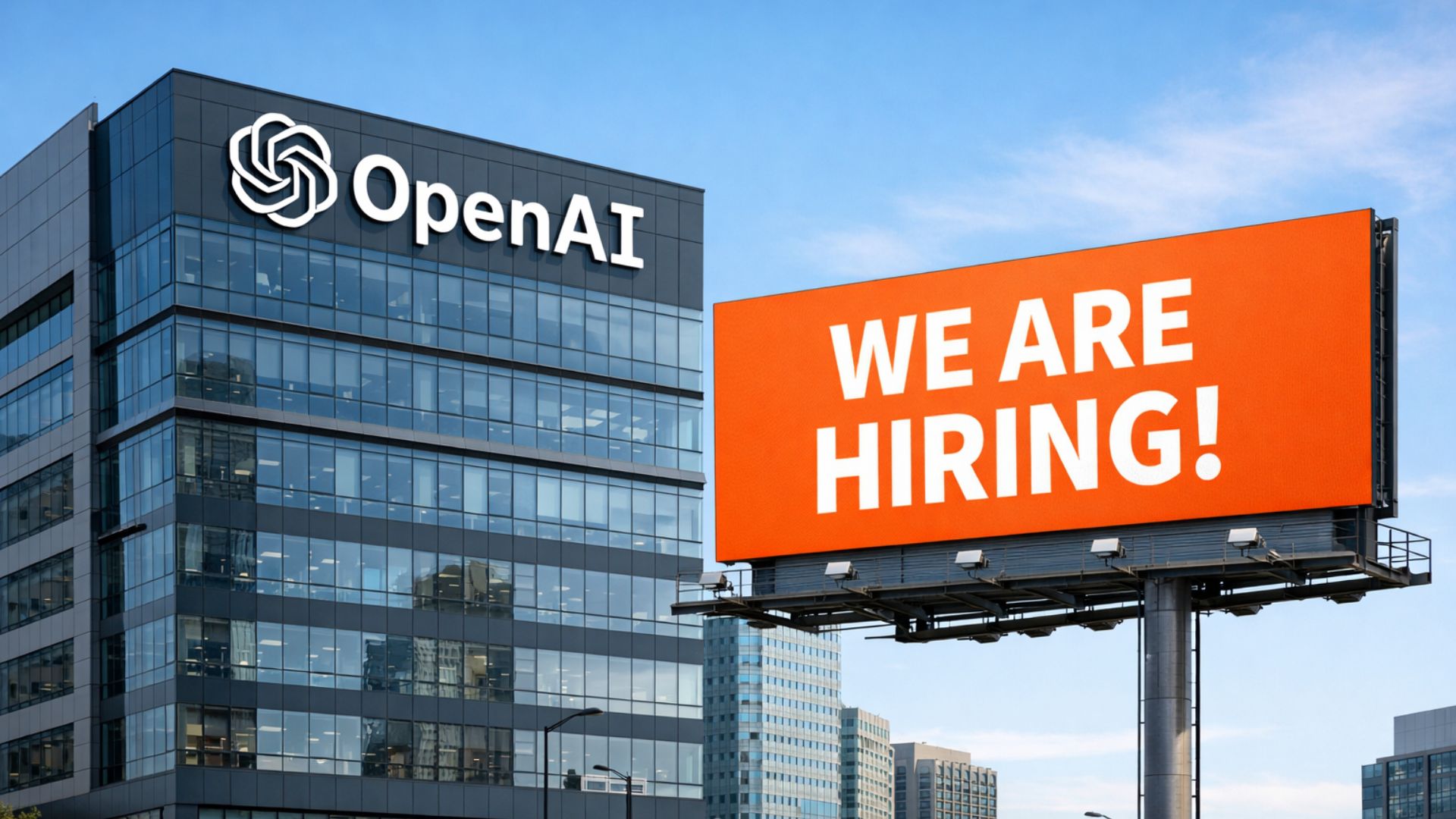
OpenAI plans to grow from about 4,500 employees to 8,000 by the end of 2026.
Looks like the AI space has entered a new phase. This is no longer only about inventing bigger LLMs. It is about building a giant operating machine that can design products as well as sell them.
OpenAI wants 8,000 Employees
While Meta, Amazon, and other major US tech companies are making huge layoffs, Sam Altman has other plans.
First reported by the Financial Times, the reason behind the 8,000-person workforce goal is to compete with its rival Anthropic.
Two people familiar with the discussion shared the information with FT. If the report is accurate, OpenAI is preparing for a future in which AI is a mainstream system used by schools, offices, hospitals, coders, and governments every day.
Anthropic CEO: AI might do everything software engineers do within 6-12 months
, Karan (@karankendre) March 21, 2026
Meanwhile OpenAI planning to nearly double its workforce https://t.co/xxCMZJXnNK pic.twitter.com/gciVWcStKW
What makes this especially important is where the company wants to place those hires.
The workforce expansion is aimed mainly at product development, engineering, research, and sales, while also increasing recruitment for “technical ambassadorship,” a role meant to help businesses use OpenAI’s tools more effectively.
That’s why they raised $100 billion in the latest funding round, valuing the company at $840 billion.
To meet the growing requirements, OpenAI has secured a new office lease in San Francisco, expanding its physical presence in the city to more than 1 million square feet.
The money explains the urgency. OpenAI brought in $13 billion in revenue in 2025, while targeting around $600 billion in total compute spending through 2030.
They expect more than $280 billion in total revenue by 2030. Those are huge figures, and they show why headcount is rising.
Also, money will definitely go into building new and better models. However, it takes work to manage it too. Advanced AI is not cheap to build or run. Every smarter model needs more chips, more data centers, and more people to keep the whole system functioning.
The old startup story was about doing more with less. The new AI story involves massive investment up front and almost no room for mistakes.
At the same time, the broader AI narrative is becoming more nuanced. OpenAI CEO Sam Altman has cautioned against “AI washing,” where companies attribute layoffs to AI even when those decisions may have been planned earlier for cost-cutting or restructuring reasons.
He believes AI is not yet the primary driver of widespread job losses. And by expanding the workforce, he might prove his point, too. AI is responsible for 1.3 million new jobs, too.
It’s All Because of Intense Competition
This hiring push is happening for a reason. OpenAI is under growing pressure from competitors like Google and Anthropic, both of which are rapidly advancing their own AI systems.
OpenAI is losing its to Anthropic. Anthropic’s Claude is now more powerful than GPT models, and they are also offering various tools to make the integration easier for other companies.
So, to regain its market share, having more people in sales, directly or indirectly, helps the company stay afloat.
Even though ChatGPT has massive popularity, with over 900 million users, more than 90% of them don’t pay for the service. That means limited revenue.
That’s why OpenAI is focusing on expansion by building more enterprise-grade tools and hiring technical ambassadors who can guide businesses on how to use its AI products effectively.
See, companies will only stick with AI if they clearly see how it improves their work, saves time, or increases revenue. If businesses struggle to understand its value or fail to integrate it properly, they are likely to abandon AI altogether or switch to competitors offering clearer results.
Earlier this month, OpenAI’s head of applications division asked employees to move away from “side projects” and focus on enhancing the company’s coding model Codex.
This approach can help OpenAI attract and retain business customers by offering tools that provide practical value in day-to-day operations.
Overall, instead of being used mainly for casual conversations, ChatGPT can evolve into a dependable productivity assistant. When businesses start relying on it for real work, it becomes an essential part of their workflow.
By the end of the year, the company expects business customers to contribute around half of its total revenue, which is currently at 40%.
Bottom Line
In short, to become profitable, AI companies are shifting from consumer to enterprise. That means more people. This hiring push makes sense, and it may even be necessary.
If you plan to join them, also understand OpenAI’s interview process here.
While it's good news for job seekers, bigger does not automatically mean better. A larger OpenAI could move faster, but it could also become harder to manage.
If OpenAI succeeds, it will not just be because it hired thousands more people. It will be because it showed that rapid growth can still produce useful products. If it fails on those fronts, then 8,000 employees will not look like strength. They will look like overhead.
There’s a growing sense of irony around this move. If AI is meant to replace human work, OpenAI hiring thousands seems contradictory. Does this indicate that AI still depends heavily on human talent, proving that full automation is far from reality?
Many candidates use AI for job interviews to prepare for questions exactly like these.
Frequently Asked Questions
Why does OpenAI want to double its workforce?
OpenAI is growing its workforce to accelerate development of AGI-level systems, expand its enterprise product line, support international expansion, and build out the infrastructure required for large-scale AI deployment. The company is competing directly with Google DeepMind, Anthropic, and Meta AI, making talent acquisition a central strategic priority.
What roles is OpenAI hiring for as it doubles its headcount?
OpenAI is primarily hiring for AI research, machine learning engineering, safety and alignment, infrastructure, product management, and go-to-market roles. The company has also been hiring in policy, legal, and enterprise sales as it scales its commercial operations. Competition for top AI research talent is intense, with compensation packages routinely exceeding $1 million annually for senior roles.
How can I get a job at OpenAI in 2026?
Landing a role at OpenAI requires strong fundamentals in machine learning, a track record of published research or demonstrable project work, and excellent communication skills. Most OpenAI roles involve multiple rounds of technical interviews, including research problem-solving sessions. Practicing with AI mock interview tools and reviewing ML fundamentals thoroughly increases your chances in competitive screening rounds.
What is the average salary at OpenAI?
OpenAI salaries vary widely by role and seniority. Entry-level ML engineers typically earn $180,000 to $250,000 in base salary. Senior researchers and staff engineers can earn $500,000 to over $1 million when including equity and bonuses. Non-technical roles in product, policy, and operations generally range from $120,000 to $250,000 depending on level.
Table of Contents
Related articles

Trade Desk Layoffs: 15% Cut With $1.5B Cash on Hand
Trade Desk layoffs hit 15% of staff. The SEC filing states a percentage, never a headcount. What the numbers mean and how to explain the cut.
C3.ai Cuts 26% Workforce in Major AI Industry Reset
C3.ai is laying off about 26% of its workforce after a major leadership change. So, why does it matter, and what does it reveal about the real state of the AI industry?
Oracle Layoffs: 21,000 Cuts and Another Round Coming
Oracle layoffs cut about 21,000 roles in one fiscal year. What the SEC filing shows, what severance actually pays, and how to explain it in an interview.
TikTok Layoffs: 250 Cut as Nashville Office Closes
TikTok layoffs cut 250 Nashville jobs as the Music Row office closes October 5. What the WARN filing shows, why AI is never named, and what to do next.