Microsoft AI CEO on How Vibe Coding Changed Software



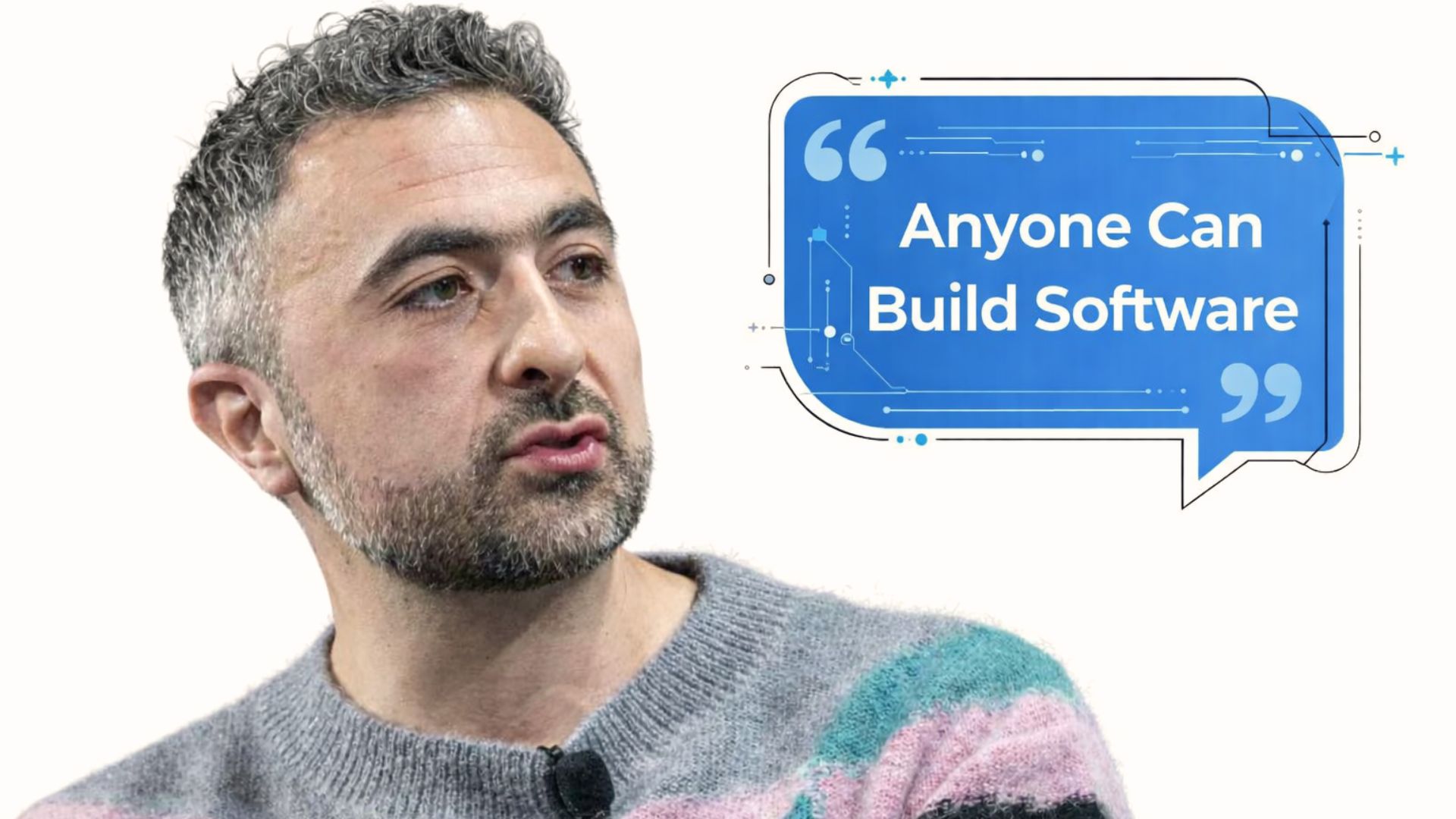
Microsoft AI CEO Mustafa Suleyman said that building software has become so easy that anyone can now create a functioning web app “in seconds” with Vibe Coding.
Mustafa Suleyman on Vibe Coding’s Potential
Vibe coding refers to the practice of using AI tools to generate code and applications through conversational prompts rather than traditional programming.
It has been the biggest discussion point among software engineers and companies in the last couple of years. Now, one of the biggest tech founders has shared his thoughts on it.
In a recent episode of the Exponential View podcast with Azeem Azhar, Microsoft AI CEO Mustafa Suleyman (who is also the co-founder of DeepMind) said:
“It’s about vibe coding with it. It is so accessible now. You can watch a 3-minute video, get spun up, launch one of these things, and suddenly you are watching an AI code up some idea that you had for organizing your family calendar or, you know, planning out your workouts for the weekend or whatever it is.
And you can create an app, a web app in seconds, and learn, you know, by watching and by doing and prompting an AI engineer to go and build something that you may have thought was never possible.”
What he is really saying here is that building software no longer feels like coding in the traditional sense.
The “watch a 3-minute video” part is important. It highlights how low the entry barrier has become.
Earlier, learning to build an app could take months. Now, you can watch a short tutorial, open an AI coding tool, and immediately start creating something real.
This shift has major consequences:
- Creation is faster and cheaper: Traditional software development often takes weeks or months. With vibe coding, prototypes can appear in days or hours, and simple apps in minutes.
- Competition increases: When anyone can create software easily, markets become more crowded.
Then, Mustafa shared how he used Vibe Coding recently:
“I have definitely got one that tracks all the music things that I love, like when various DJs are playing, when concerts and festivals, and like then tries to plan out to map that to my travel schedule.”
They also discussed the societal risks of conscious AI and the potential dangers of people projecting consciousness onto AI systems.
So, he vibe-coded a system that tracks his favorite DJs, upcoming concerts, and travel schedule. This automates what used to be manual work into a self-updating spreadsheet.
The Problem with “Vibe Coding”
While Suleyman champions vibe coding’s accessibility, others in the industry are looking beyond the hype to what comes next. Bret Taylor, OpenAI’s board chair, acknowledged in a “Big Technology Podcast” interview that building software quickly through vibe coding will soon feel routine.
Taylor believes that AI agents will replace traditional software interfaces. Instead of navigating dashboards or filling out browser forms, users will increasingly interact with autonomous AI agents that execute tasks on their behalf.
That seems a little too far-fetched.
Mustafa’s take on vibe coding sounds exciting, but it also glosses over some very real problems.
Yes, AI makes it easier to spin up an app quickly, but “working” doesn’t mean “working well.” Most vibe-coded apps are fine for demos or personal use, but they often fall apart when real users, real data, or real scale show up.
Performance issues, security holes, and messy logic are easy to hide when an AI is doing the heavy lifting and the human doesn’t fully understand what’s under the hood.
There’s also a risk of overselling accessibility. Watching an AI write code feels empowering, but it can create a false sense of mastery. If something breaks, many vibe coders won’t know why or how to fix it without asking the AI again.
Bottom Line
Marc Andreessen famously declared that “software is eating the world” in 2011. Fifteen years later, we’re witnessing the next chapter: AI is eating software itself.
For innovators, it presents an extraordinary opportunity. The same tools threatening established companies also enable new entrants to compete on ideas rather than technical resources.
The implications of this shift became painfully clearwhen Anthropic announced legal-focused capabilities for its Cowork assistant. The AI tool can now review legal documents and handle compliance work. It caused a panic in the world and was dubbed as the “SaaSpocalypse.”
Other than Vibe Coding, Suleyman advocates for ensuring that AI development remains aligned with human interests and is controlled by humans, rather than seeing AI as a natural evolution beyond humanity.
What Vibe Coding Means for People Who Are Not Developers
Mustafa Suleyman is describing a change in who can build software, not just how fast developers can work. When generating a functioning web app takes seconds through natural language prompts, the barrier between having an idea and having a working prototype collapses in ways that matter for anyone who works with digital products.
For non-developers in product, operations, or business roles, this is a genuine opportunity. The ability to prototype an idea, test it with real users, and iterate on the result without waiting for an engineering sprint is new. Companies that move quickly on it will have an advantage over those that maintain strict developer-non-developer divisions.
The practical skill to develop is not coding but product judgment. Knowing which problem is worth solving, how to define the simplest version of a solution, and how to evaluate whether a prototype is actually working requires domain knowledge and user empathy that no AI tool provides automatically.
For developers, the shift is equally real. The competitive advantage is no longer the ability to write syntactically correct code. It is the ability to architect systems, make decisions about trade-offs, and maintain and debug AI-generated code that did not come with documentation. Those skills require deeper computer science foundations, not less of them.
Whatever your role, demonstrating comfort with AI-assisted workflows in interviews is becoming a baseline expectation at technology companies. Being able to discuss specific examples of how you use these tools, and what judgment calls you make about when to trust them, sets you apart from candidates who can only talk about the tools in the abstract.
Frequently Asked Questions
How is AI changing the job market in 2026?
AI is automating repetitive cognitive tasks across industries, shifting demand toward roles that require judgment, creativity, and interpersonal skills. This is causing displacement in some areas while creating entirely new categories of work in AI oversight, prompt engineering, and human-AI collaboration. Workers who learn to use AI tools effectively are gaining a competitive edge.
Which jobs are most at risk from AI automation?
Roles involving highly repetitive data entry, basic content creation, and routine customer service scripting face the highest automation risk. However, complete job elimination is slower than headlines suggest. Most roles are being augmented rather than replaced, with portions of the work automated while humans handle the judgment-intensive parts that require nuanced reasoning.
What AI skills should you add to your resume in 2026?
Prompt engineering for tools like ChatGPT and Claude, experience with AI-assisted workflows in your specific domain, and familiarity with automation platforms like Zapier or Make are all valued. For technical roles, Python proficiency with popular ML frameworks is increasingly expected. For non-technical roles, showing fluency with AI productivity tools demonstrates adaptability.
How can you use AI to improve your job search?
AI tools can help you tailor your resume to each job description, generate cover letters, practice for interviews with real-time feedback, and research companies quickly. AI that helps with interviews's Interview Copilot provides answer guidance during live interviews so you stay focused and confident. Using these tools strategically can meaningfully shorten your job search timeline.
Table of Contents
Related articles

Amazon Plans More Layoffs as Part of 30,000 Job Cuts in 2026
Amazon plans more layoffs in 2026 as it moves ahead with cutting around 30,000 corporate jobs worldwide
November Layoffs Hit 71,321 in 2025 as Hiring Drops to 15-Year Low
U.S. companies cut 71,321 jobs in November while hiring hit lowest level since 2010, Challenger report shows. AI blamed for 54,694 layoffs in 2025.
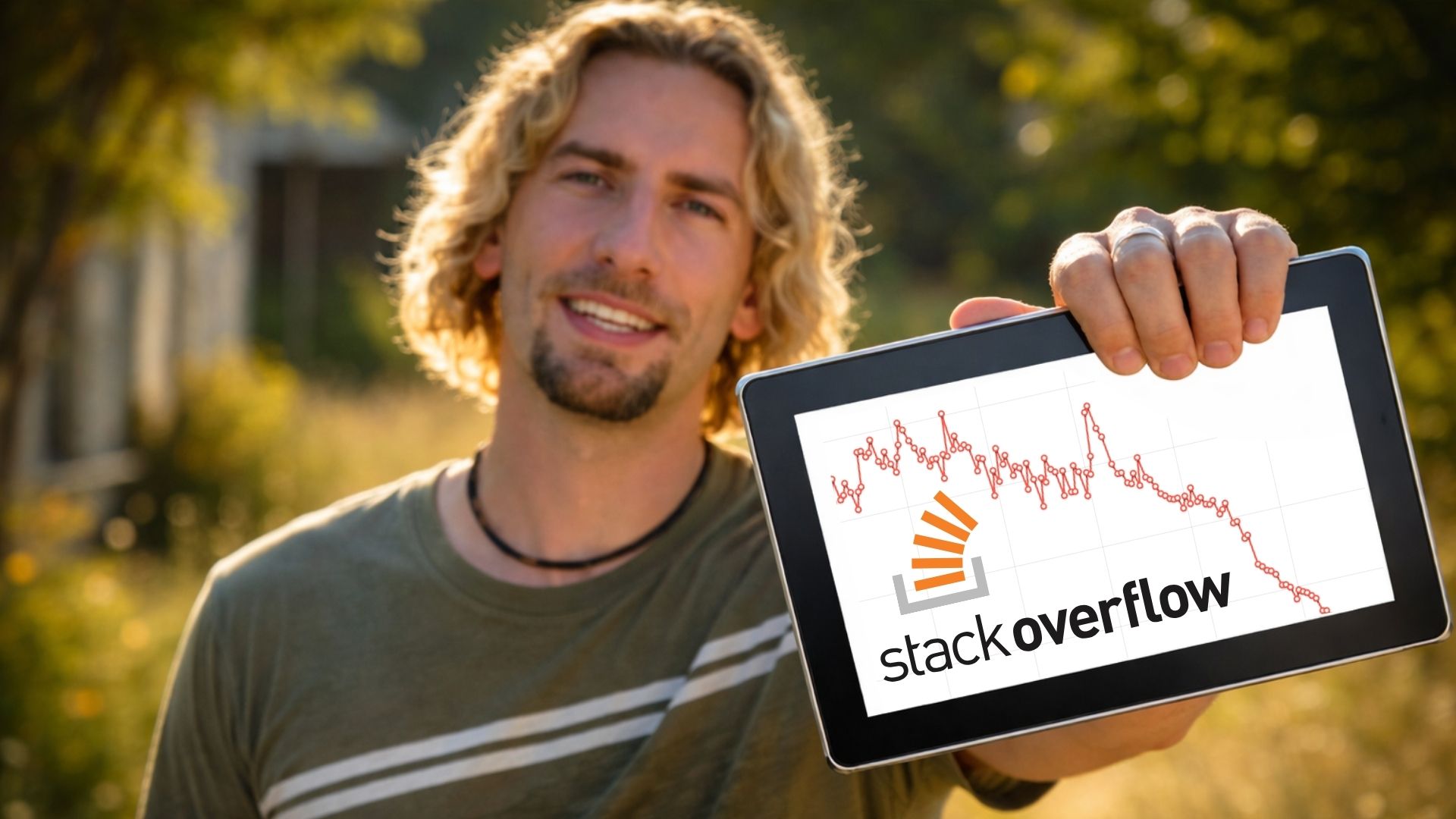
Why Developers are Moving Away from Stack Overflow?
Stack Overflow questions are decreasing as AI changes how developers code, debug, and learn. Here’s what the decline really means for programming.

How to Pass a Job Interview in 2026?
Learn how to pass a job interview in 2026 with practical tips on how to prepare before, answer questions, and use AI to your advantage.
McKinsey Report Finds 30% of Companies Planning Layoffs Due to AI in 2026
A new McKinsey report reveals that 30% of companies are preparing to cut jobs due to AI. Most haven’t fully adopted the technology, but workforce changes have already begun.