London Living Wage: Current Rate and Accreditation



Quick Answer
- The London Living Wage is £14.80 per hour (2025/26), set voluntarily by the Living Wage Foundation, distinct from the statutory National Living Wage of £12.71/hr.
- The gap between the two rates is £2.09/hr, worth approximately £4,075 per year for a full-time worker in London.
- Over 3,000 London employers hold Living Wage Foundation accreditation, including KPMG, Deloitte, HSBC, and Google UK.
What Is the London Living Wage
The London Living Wage is £14.80 per hour. This rate was announced on 22 October 2025 and employers who hold London Living Wage accreditation are required to implement it by 1 May 2026.
The London Living Wage is set by the Living Wage Foundation, an independent UK organisation that calculates what workers need to earn to afford a decent standard of living in London. It is a voluntary rate. No employer is legally required to pay it. However, over 3,000 London employers have voluntarily committed to the rate and obtained accreditation from the Living Wage Foundation.
London has a separate, higher rate than the rest of the UK because it has the highest housing costs, transport costs, and overall cost of living of any UK city. Average rent in London reached approximately £2,300 per month in 2025, which is roughly double the UK average outside London. The London Living Wage reflects these realities in a way that the statutory national rate does not.
London Living Wage vs National Living Wage
The distinction between the London Living Wage and the UK National Living Wage is one of the most commonly misunderstood aspects of UK pay policy. They are entirely separate things:
The London Living Wage (£14.80/hr): Voluntary. Set by the Living Wage Foundation. Based on the actual cost of living in London, calculated by the Centre for Research in Social Policy at Loughborough University. Higher than the UK-wide rate because London costs are higher. Applies to all workers in London aged 18 and over.
The UK National Living Wage (£12.71/hr): Statutory. Set by the UK government and enforced under the National Minimum Wage Act 1998. This is the legal minimum wage for workers aged 21 and over in the UK. Applies everywhere in the UK including London. Workers in London specifically may also want to review the minimum wage in London guide for the full statutory picture.
The gap is £2.09 per hour. For a full-time worker in London on a 37.5-hour week, that is £78.38 per week, or approximately £4,075 per year. Given London housing costs, transport costs, and food prices, that gap represents real purchasing power that affects workers' ability to afford stable accommodation in the city.
For full detail on the statutory UK rate and how it is set, the UK National Living Wage covers the complete picture. The average salary in the UK provides context on where the living wage sits relative to typical London and UK-wide earnings.
Who Calculates and Sets the London Living Wage
The Living Wage Foundation sets the London Living Wage. It is part of Citizens UK, a broad-based community organising charity. The Living Wage Foundation was established in 2011 to formalise the living wage campaign that had been running in London since 2001.
The calculation methodology is conducted by the Centre for Research in Social Policy at Loughborough University. Researchers build a Minimum Income Standard (MIS) for London, which is a detailed household budget reflecting what members of the public, through deliberative research, identify as a minimum decent standard of living. The MIS is not a poverty line. It represents a standard above which people can participate in society, not merely survive.
The London rate is updated annually, typically announced in November alongside the UK-wide rate (which was £13.85/hr for 2025/26 outside London). The Living Wage Foundation then gives accredited employers six months to implement the new rate. Employers accredited before the announcement have until 1 May of the following year to comply.
The Foundation accredits employers who pay all directly employed staff and regularly contracted workers at least the London Living Wage. It does not automatically cover agency workers unless the employer voluntarily extends the commitment to their supply chain.
Which Employers Pay the London Living Wage
Over 3,000 employers in London hold Living Wage Foundation accreditation. This is the largest concentration of accredited living wage employers in any UK city by a significant margin, reflecting London's higher profile for the issue and the wider gap between statutory and living wage levels.
Some of the most recognisable accredited London Living Wage employers include:
Financial services: KPMG, Deloitte, Aviva, Lloyds Banking Group, Barclays, and HSBC are among the major financial services firms accredited. Most of the major UK high street banks now hold accreditation for their London operations.
Technology: Google UK is an accredited London Living Wage employer. Several major technology firms operating from London campuses have made the commitment, reflecting the tech sector's broader engagement with the living wage in the UK.
Retail and hospitality: Major retailers and hotel groups operating in London have pursued accreditation, partly in response to high staff turnover driven by London's housing costs making low-paid work increasingly unviable.
For workers preparing to interview at accredited London financial employers, specific preparation helps. The KPMG UK interview process and Barclays interview process each have their own structures and expectations that are worth understanding before you apply.
Accredited employer status means a worker can verify before accepting any offer that their employer has committed to the living wage, removing pay uncertainty from the equation.
Annual Equivalent and What It Covers
At £14.80 per hour for a standard 37.5-hour working week, the London Living Wage is equivalent to approximately £28,860 per year before tax. After income tax and National Insurance at standard rates, take-home pay for a single person is approximately £23,500 to £24,500 per year.
The Minimum Income Standard calculation for London estimates this income is sufficient to cover:
Rent: A room in shared accommodation in inner London or a one-bedroom flat in outer London. The MIS does not assume a single worker on the living wage can afford to rent a one-bedroom flat in central London alone. At £2,300 per month average, even shared accommodation in many London boroughs strains the budget at the living wage level.
Transport: A monthly Zone 1-3 Travelcard or equivalent Oyster Card usage for commuting, plus occasional travel outside zones.
Food: A weekly shop covering a nutritious diet based on the actual cost of healthy food in London supermarkets.
Healthcare: NHS prescription costs, dental check-ups, and basic optician costs.
Clothing: An annual clothing budget for a professional working environment.
Participation: A modest allowance for social activities, culture, and community life so workers are not excluded from London's social fabric despite its higher costs.
The MIS is clear that the London Living Wage does not provide comfort. It provides sufficiency. Workers earning below it are, by this calculation, unable to meet one or more of these basic categories at the standard considered acceptable by London residents themselves. For context, a worker in London earning below the living wage in 2026 is essentially falling further behind each year: the rate has risen from £10.75 in 2015 to £14.80 in 2026, a 38% increase over a decade that has outpaced both inflation and statutory wage growth in the same period.
How to Find London Living Wage Jobs
The most reliable approach is to target Living Wage Foundation accredited employers directly. The full accredited employer list is published and searchable on the Living Wage Foundation website. Filtering by London and by sector gives you a targeted list of employers who have made a verifiable pay commitment.
Beyond accredited employers, London financial services, technology, legal, and professional services sectors generally pay well above the living wage from entry level. Knowing how to negotiate a salary offer before you accept means locking in the strongest position from the start, rather than needing to fight for increases later.
Before any pay discussion with a London employer, it helps to discuss salary strategy with the community to hear how others framed their asks in similar roles.
If you are currently earning below the London Living Wage at a non-accredited employer, assessing your position with honest market data helps you decide whether to negotiate or look elsewhere. If you already have an offer in hand, a well-structured counter offer can close the gap between what they propose and what the living wage benchmarks suggest is fair. For comparison, the living wage in Ireland follows a similar voluntary framework worth referencing if you work across borders.
For interview preparation at London Living Wage accredited employers, Interview Copilot provides real-time support during your live interview, helping you think through questions clearly and make the strongest possible case for the role.
Candidates who practise before the real interview typically feel more prepared and confident going in.
Related Interview Guides
- Lloyds Banking Group Interview Process - Lloyds is a London Living Wage accredited employer
- PwC UK Interview Process - PwC is a London Living Wage accredited employer
- Signs You Are Underpaid - for workers not yet earning the London Living Wage
For more wage benchmarks across the UK, browse our salary advice guides. When you are ready to negotiate, understanding salary negotiation principles gives you a framework for the conversation.
Frequently Asked Questions
What is the London Living Wage 2025/26?
The London Living Wage is £14.80 per hour, announced on 22 October 2025. Accredited employers must implement this rate by 1 May 2026. It is a voluntary standard set by the Living Wage Foundation, separate from the statutory National Living Wage.
What is the difference between the London Living Wage and the National Living Wage?
The London Living Wage (£14.80/hr) is a voluntary rate set by the Living Wage Foundation based on the actual cost of living in London. The National Living Wage (£12.71/hr) is the statutory legal minimum wage for workers aged 21 and over across the UK. The London rate is higher because London has the UK's highest housing and living costs.
How many employers pay the London Living Wage?
Over 3,000 employers in London hold Living Wage Foundation accreditation. Accredited employers include KPMG, Deloitte, Barclays, HSBC, Aviva, Lloyds Banking Group, Google UK, and thousands of smaller organisations across all sectors.
What is the London Living Wage annual salary?
At £14.80 per hour for a 37.5-hour working week, the London Living Wage is equivalent to approximately £28,860 per year before tax. After income tax and National Insurance, take-home pay for a single person is approximately £23,500 to £24,500 per year.
Who sets the London Living Wage?
The London Living Wage is set by the Living Wage Foundation, part of Citizens UK. The calculation is conducted by the Centre for Research in Social Policy at Loughborough University using a Minimum Income Standard methodology. The rate is updated annually and announced in October or November each year.
Targeting a London Living Wage accredited employer? Practise your interviews with AI Mock Interview and walk in ready.
Table of Contents
Related articles

Minimum Wage in NSW: Rate, Rules and Context
The minimum wage in NSW is $26.44 per hour from 1 July 2026. Learn who it covers, how far it goes in Sydney, and how to earn above the minimum in New South Wales.
31 Dollars an Hour Is How Much a Year?
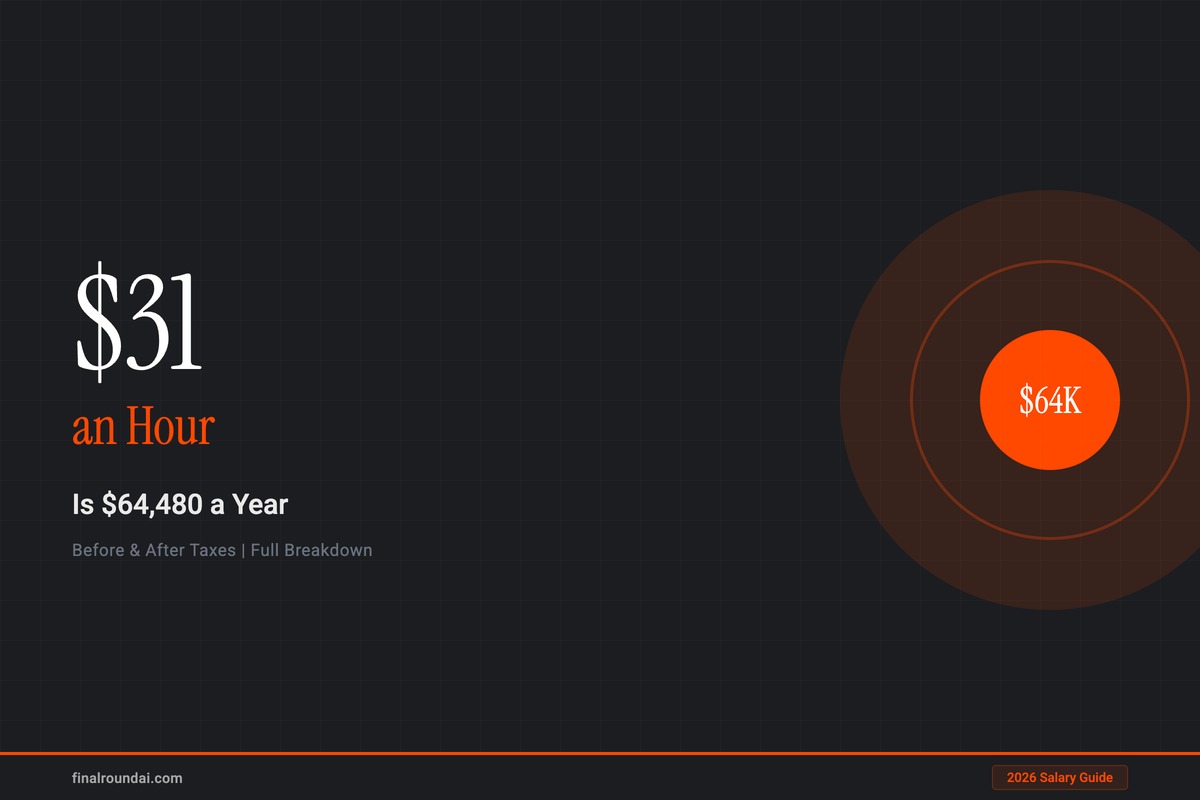
$31 an hour equals $64,480 per year. See the 2026 after-tax breakdown for single and married filers, plus monthly, biweekly, and weekly pay calculations.
20,000 Dollars a Year Is How Much an Hour
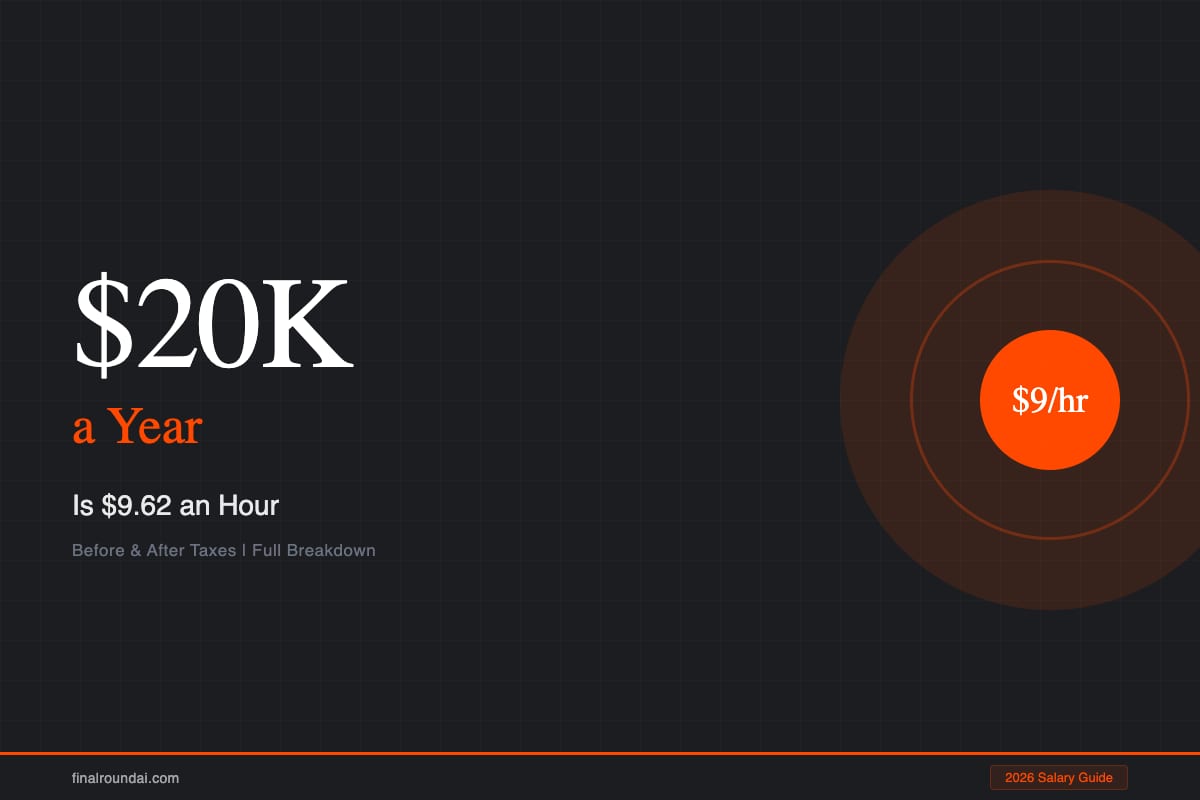
20k a year is $9.62/hour (before taxes). See the full 2026 breakdown: weekly, monthly, after taxes by filing status, and jobs that pay $20k.
48,000 Dollars a Year Is How Much an Hour
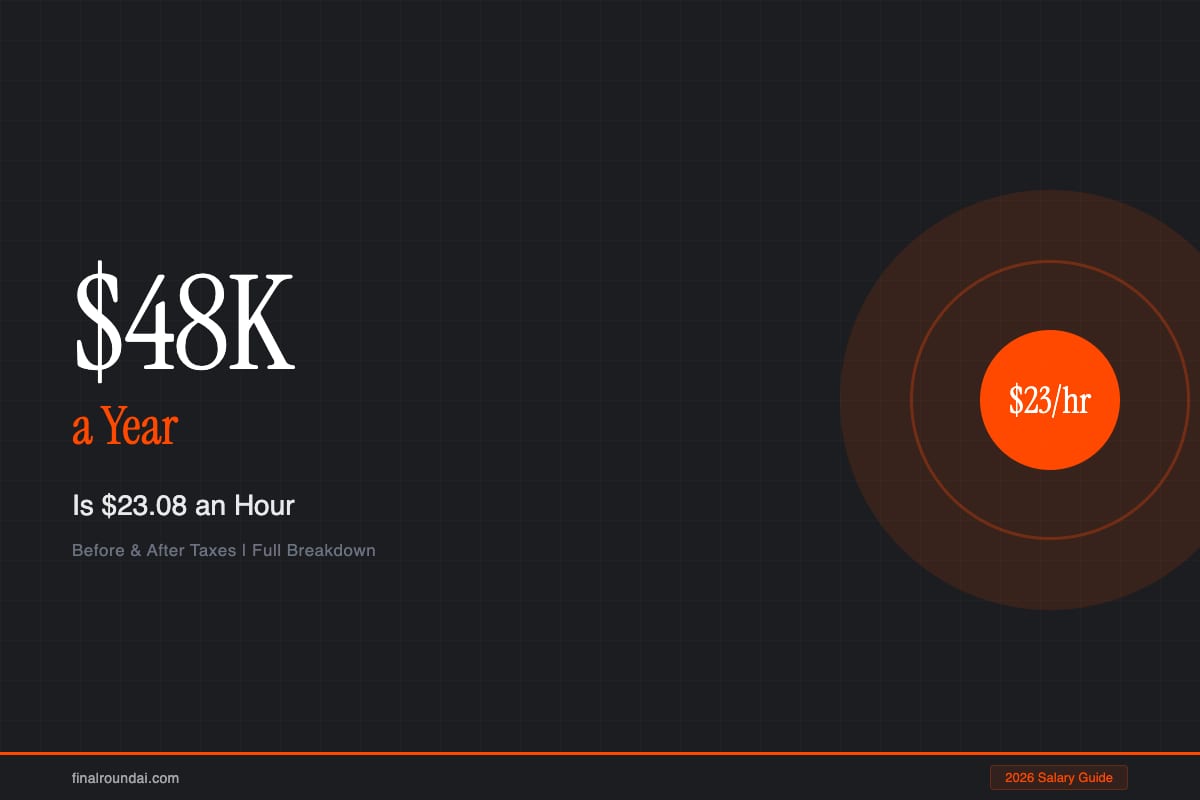
$48k a year is $23.08/hour (before taxes). See the full 2026 breakdown: weekly, monthly, after taxes by filing status, and jobs that pay $48k.

30 Dollars an Hour is How Much a Year?
Wondering how much 30 Dollars an hour makes in a year? Learn the exact yearly pay, taxes, part-time vs full-time math, and negotiation tips.