How Many Jobs Should You Apply for Each Day? (2026)



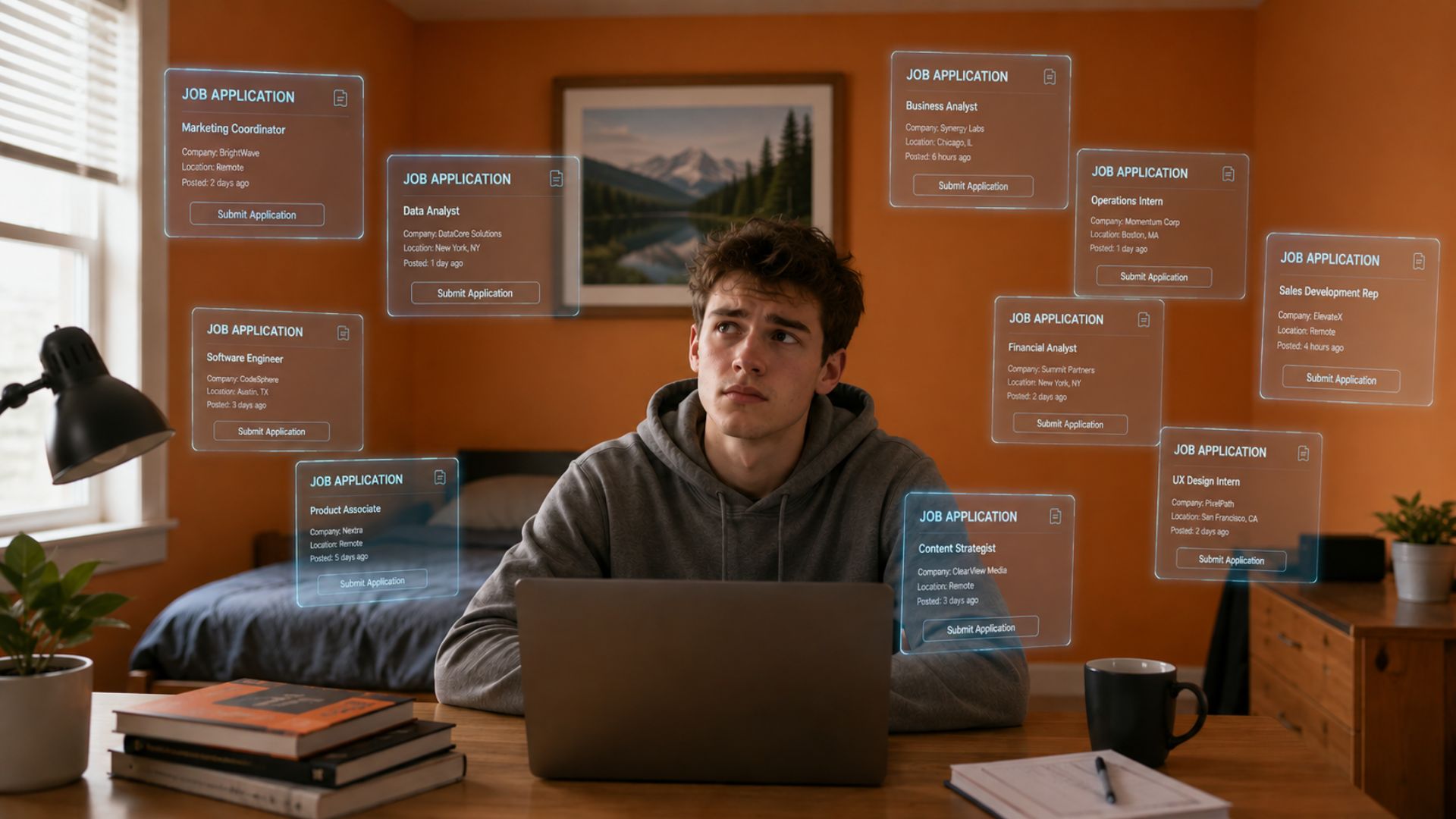
If you are in the job search mode, you have probably seen wildly different advice. One person swears by sending 50 applications a day. Another says 5 a day is plenty. So, what does the data say about how many jobs you should apply for daily?
Well, it depends on a few things, but the data increasingly favors a smarter, more targeted approach over a "spray and pray" strategy.
The Myth of "More Applications = More Interviews."
More applications should mean more chances and hence more interviews. It feels logical, right? More interviews should mean a job offer faster. Except that's not really how it works in 2026.
Job seekers now submit anywhere from 32 to over 200 applications before receiving a single offer, depending on industry and experience level. But the success rate per application has dropped to just 0.1-2%.
So if you are applying to 50 jobs a day with a generic resume, you are not increasing your odds by much. You are just generating 50 rejections, instead of 5.
There's also a flood problem on the employer side. The average job opening now receives 242 applications, according to Glassdoor's data. And popular companies, especially entry-level or well-known brands, can see 400+ applications.
When a recruiter is staring down hundreds of applications for one job, they are not reading every resume word-for-word. Many use Applicant Tracking Systems (ATS) that scan resumes for keywords before a human ever sees them.
If your resume doesn't match the job description closely, it might get filtered out automatically, no matter how qualified you actually are.
This is why quality matters more than quantity.
A tailored resume that uses the same keywords as the job posting, highlights relevant experience, and is written specifically for that role has a much better chance of getting past the ATS and catching a human's eye.
A tailored, ATS-optimized resume goes from a 30% pass rate to a 75%+ pass rate. That's a massive difference, and it's not something you can replicate by blasting out the same resume to 50 different companies.
The Ideal Number of Job Applications Per Day
The idea number of jobs to apply to daily is 3 to 5 quality applications for most full-time job seekers.
A report from Huntr found that a typical job seeker submits about 16 job applications a week, which is a steady pace that keeps your pipeline full without turning the search into a second full-time job. That works out to roughly 2-3 applications per day if you are applying on weekdays.
Entry-Level Candidates
If you are just starting, fresh out of college, or switching careers with no experience yet, you are in a tough spot right now. Entry-level positions have dropped a lot, and the ones that exist get flooded with applicants.
For entry-level job seekers, aiming for the higher end of the range, around 5 applications per day, makes sense but only if each one is reasonably tailored.
Since entry-level roles often don't require years of specific experience, you can usually adjust your resume and cover letter for each application without it taking hours.
38% of job seekers have used AI tools to help with job applications. As an entry-level candidate, using AI tools to help tailor your resume to each job description can help you apply faster and better.
Mid-Level Professionals
If you have got a few years of experience under your belt, your search looks a little different. You probably have a clearer sense of what roles you are qualified for, and your resume likely needs less dramatic rewriting between applications.
For mid-level professionals, 2-3 quality applications per day is a solid target.
Mid-level candidates also benefit hugely from being selective. At this stage, you likely have specific skills, certifications, or industry experience that not every applicant has. So it's worth spending extra time finding postings where you are a strong match.
Senior-Level Professionals
If you are at the senior or executive level, including director, VP, specialized senior roles, the math flips even more toward quality. Senior roles are fewer in number, more specific in requirements, and almost always filled through networks before they are ever posted publicly.
For senior professionals, 1-2 highly targeted applications per day tends to make more sense.
At this level, each application often requires real customization, adjusting your resume to highlight specific achievements relevant to that company's challenges, writing a thoughtful cover letter, and sometimes even reaching out directly to someone at the company beforehand.
What Happens If You Apply to Too Many Jobs?
Applying to too many jobs can actually backfire in a few ways:
- You get flagged for inconsistency: Applying to too many different types of roles in a short period can actually get your applications red-flagged. It can come across as a signal that you aren't a serious candidate for any specific role.
- You burn out: If you spend 6 hours a day blasting out 30 applications, you will likely run out of steam within a week or two, and then your search stalls completely.
- The mental health toll: Constantly hitting "submit" and hearing nothing back can wear down your motivation and confidence fast.
Overall, it can hurt your targeting and self-reflection. When you are focused purely on volume, you skip the step of actually reflecting on whether a role is a good fit, whether your resume genuinely matches the requirements, or whether you need to adjust your approach.
Conclusion
So, how many jobs should you apply for each day? Based on the most current data and real job seeker experiences, the sweet spot for most people is 3-5 well-tailored applications per day if you are searching full-time, or 1-2 per day if you are employed and searching on the side.
But the number itself is less important than how you are applying. Targeted applications outperform volume every time.
Take the time to customize your resume, research the company, and apply only to roles that genuinely match your skills and goals.
Quality vs. Quantity in Job Applications
Sending 50 generic applications produces fewer callbacks than sending 10 tailored ones. ATS systems at most mid-size and large companies scan for keyword overlap between your resume and the job description. A resume without those keywords gets filtered before a human sees it. Hiring managers also spot copy-pasted cover letters instantly because they reference the wrong role or company name. Research from LinkedIn shows that personalized applications get two to three times more callback rates than identical ones sent in bulk. The fix is not to apply to fewer jobs. It is to spend 10 to 15 minutes customizing the top third of your resume and your first paragraph of your cover letter for each role. AI Resume Builder scans each job description and rewrites your resume to match the specific keywords and phrasing the employer is looking for, cutting tailoring time from 30 minutes to under 5 minutes per application.
Best Job Platforms by Role
Not all job boards are equal for every role. Knowing where to focus saves hours of search time each week.
- LinkedIn: Best for corporate roles, enterprise companies, finance, consulting, and marketing. The recruiter network is largest here. InMail outreach to hiring managers works well for roles in these fields.
- Wellfound (formerly AngelList): Best for startups at seed to Series B stage. Tech roles, especially engineering and product, appear here before they hit LinkedIn. Salary and equity ranges are listed upfront.
- Indeed: Broadest search, covers hourly and salaried roles across all industries. High volume means higher competition, so tailoring is more important here than anywhere else.
- Handshake: Best for new graduates and campus recruiting pipelines. Many companies post early career and rotational programs exclusively on Handshake.
- Levels.fyi: Best for software engineering roles where compensation data matters. Companies list total comp packages including base, bonus, and equity, making it easier to compare real offers.
Once applications are out, the next step is preparing for the calls that come back. Interview Copilot listens in real time during phone screens and video interviews and surfaces relevant talking points as questions come up, so you are prepared even if a recruiter calls unexpectedly.
What Makes a Strong Application
A strong application does four things: it passes the ATS keyword filter, it catches the hiring manager in the first three lines, it links to proof of your work, and it signals genuine interest in this company specifically. The mechanics matter: a tailored resume with keywords from the exact job description, a cover letter that names the hiring manager if possible, an updated LinkedIn profile that matches the resume exactly, and a portfolio or GitHub link if the role involves any technical or creative output. Once your applications are moving, use AI Mock Interview to practice for the interviews that follow. The gap between submitting an application and hearing back is the best time to sharpen your interview answers so you are not unprepared when a recruiter calls on short notice.
Frequently Asked Questions
How many jobs should I apply to per day?
Three to five tailored applications per day is a realistic and productive target for most job seekers. Applying to more than 10 per day usually means cutting corners on tailoring, which reduces callback rates. If you have a current job and limited time, one to two quality applications per day will outperform five rushed ones every time.
Is it better to apply to more jobs or fewer jobs?
Fewer tailored applications outperform more generic ones. The key metric is callback rate, not application count. If you are getting fewer than 5 to 10 percent of applications to the phone screen stage, the problem is almost always quality and targeting, not volume.
How long does it take to get a job interview after applying?
Most companies take one to three weeks to schedule a first-round interview after receiving an application. Startups and smaller companies tend to move faster (three to seven business days). Enterprise companies and government roles can take three to six weeks or longer. Apply earlier in a posting cycle because hiring managers often shortlist candidates in batches.
How many job applications per week is normal?
Active job seekers typically send 10 to 25 applications per week. If you are employed and searching on the side, 5 to 10 per week is realistic. The more senior the role, the fewer applications are needed because targeting becomes more important than volume at the director level and above.
Should I apply to jobs I am not fully qualified for?
Yes, if you meet 60 to 70 percent of the listed requirements. Job descriptions are often aspirational. Hiring managers rarely find a perfect match and prioritize candidates who show strong trajectory and fit. The exception is roles with hard licensing or certification requirements, such as an active CPA license or a specific security clearance. If those are listed as required (not preferred), they are genuine gatekeepers.
Candidates who use AI for final round interviews to practice before the real interview typically feel more prepared and confident going in.
Related Interview Guides
- What to Do After Submitting Job Applications - The right steps to take after you apply, including follow-up timing and how to track your pipeline.
- Follow Up After Interview Checklist - How and when to follow up after an interview to stay top of mind without being annoying.
- Interview Hacks - Practical techniques to improve your performance in phone screens and interviews.
- Fastest Interview Prep Plan in 30 Minutes - How to prepare quickly when a recruiter calls with short notice.
Table of Contents
Related articles

Parakeet AI Price in India: Is It Worth Paying?
Parakeet AI costs $18.99/month in USD with no India pricing. At mid-2026 rates, Indian users pay Rs. 1,580 to Rs. 1,650 per month.
What Is SubcueAI? The Native Desktop AI Interview CoPilot™ Explained
What Is SubcueAI? The Native Desktop AI Interview CoPilot™ Explained
How to Prepare for an Interview: Step-by-Step Guide
How to prepare for an interview with a step-by-step guide covering job description analysis, company research, STAR story banking, format-specific prep, and follow-up emails.
STAR Method Interview Questions: Company-Specific Frameworks for Amazon, Google, and Meta
Learn how to answer STAR method interview questions using company-specific frameworks. Includes real examples for Amazon, Google, and Meta with role-level guidance for SDE2, L4, L5, and E5 candidates.

Interviewing.io Review in 2026: Pros, Cons and Best Alternatives
Interviewing.io lets you practice anonymously with senior engineers from Google, Meta, and Amazon. This 2026 review covers pricing ($179-$300+ per session), waitlist issues, who it is best for, its core limitations, and the best alternatives including Final Round AI.
Final Round AI vs Interview Sidekick: Which Should You Use?
Final Round AI vs Interview Sidekick: an honest, feature-by-feature comparison covering live interview assistance, mock interviews, pricing, detection risk, and which tool fits your specific interview prep needs.