Can Cluely Be Detected? What Testing Shows in 2026



Cluely can be detected on HackerRank, CoderPad, and CodeSignal. On video conferencing platforms like Zoom, Google Meet, and Microsoft Teams, Cluely is not detected through screen capture alone, but behavioral cues during live video can still flag it to a human interviewer. The detection answer depends entirely on which type of interview and which platform you are asking about. Understanding how each platform monitors differently is essential for any candidate considering this AI interview copilot tool.
Quick Answer
- On HackerRank, CoderPad, and CodeSignal: Cluely is detectable. HackerRank's Desktop App Mode documentation updated in July 2026 names Cluely by name as a process it detects and closes during assessments.
- On Zoom, Google Meet, and Microsoft Teams: Cluely's GPU-rendered overlay is not captured in the screen share feed, so the platform itself cannot detect it. A human interviewer watching your behavior can still notice it.
- Cluely's "Pro" plan claims deeper undetectability, but a 2026 test of four AI interview tools found Cluely was flagged on all three major coding assessment platforms tested.
How Cluely Detection Actually Works
Cluely renders its overlay using DirectX or Metal hooks that write directly to the GPU's physical display output. This bypasses the virtual framebuffer that Zoom, Teams, and Meet capture when you share your screen. A screenshotter capturing your Zoom call cannot see the Cluely overlay because Cluely operates at a layer below what the video conferencing tool can access.
That is the technical explanation for why Cluely is not detected by video conferencing software. But coding assessment platforms like HackerRank, CoderPad, and CodeSignal use different detection methods that operate at a different level. Understanding which detection method applies to your interview is the key question.
You can see a specific platform analysis in the Cluely HackerRank detection article, which covers exactly what HackerRank flags and what the flagging triggers in detail.
Cluely on HackerRank: Detected
HackerRank's Desktop App Mode documentation, updated in July 2026, names Cluely by name as a process it detects and closes during assessments. This is not a general "unauthorized software" flag. HackerRank explicitly identifies Cluely by its process signature.
The detection mechanism: HackerRank monitors running processes on the OS during desktop app mode assessments. Cluely must run as a named process to function. An OS-level monitor catches named processes including Cluely regardless of whether the overlay is rendered invisibly from a screen sharing perspective.
HackerRank also logs hotkey patterns. Cluely uses Cmd+Enter as its trigger to generate a response. This keystroke pattern fires standard keydown events that HackerRank's proctoring scripts monitor for suspicious background activity. Several candidate reports from 2025 and 2026 describe sessions flagged after the hotkey triggered while a solution was being generated.
Cluely on CoderPad: Detected
CoderPad flagged Cluely in a 2026 test that ran four AI interview tools against enterprise proctoring accounts on HackerRank, CoderPad, and CodeSignal. According to that test, CoderPad surfaced an unauthorized-application alert when Cluely was running.
CoderPad uses a different detection mechanism than HackerRank: it monitors copy-paste behavior and large code block insertions through a clipboard tracker built into the assessment environment. Cluely's workflow of generating a code solution and having the candidate paste it into the IDE triggers this monitoring.
CoderPad also tracks the Cluely hotkey as a suspicious keystroke pattern on enterprise accounts. One candidate reported that an interviewer at a FAANG company immediately called out the pattern and the session ended shortly after.
Cluely on CodeSignal: Detected
CodeSignal was included in the same 2026 four-tool test and flagged the session when Cluely was running. CodeSignal uses both browser-side event listeners and OS-level process monitoring depending on the assessment configuration. At enterprise tier, CodeSignal's proctoring flagged Cluely and logged the session for manual review.
CodeSignal is used by Amazon, Workday, and Goldman Sachs for their standardized coding assessments. These companies use enterprise-grade CodeSignal accounts with the full proctoring stack enabled. Attempting to use Cluely in a CodeSignal assessment at any of these companies carries a high risk of detection in 2025 and 2026.
Cluely on Zoom, Google Meet, and Teams: Not Detected by the Platform
On video conferencing platforms, Cluely is not detected through screen capture. The GPU-rendered overlay Cluely uses writes directly to the physical display output, bypassing the virtual framebuffer that Zoom, Meet, and Teams capture when you share your screen.
This means the recording of your screen share does not show the Cluely overlay. A reviewer watching the recording cannot see it. However, human interviewers watching live can still notice behavioral patterns. Candidates who glance off-screen at consistent intervals, produce unusually polished answers without hesitation, or give answers that are structurally identical across multiple questions can trigger interviewer suspicion regardless of what any automated tool does or does not detect.
The Cluely review covers how users have reported the tool performing in behavioral video interviews and where the limitations appear in practice.
Cluely Pro: Is It More Undetectable?
Cluely's Pro plan claims deeper undetectability features. The independent testing from 2026 does not support a meaningful distinction between Cluely standard and Cluely Pro on the major coding assessment platforms tested. Both were flagged on HackerRank, CoderPad, and CodeSignal in the published test results.
The "undetectable" language in Cluely's marketing refers primarily to screen share invisibility on video conferencing platforms, which applies to both the standard and Pro plans. It does not mean invisibility to OS-level process monitoring or to coding assessment platform proctoring tools.
Behavioral vs Technical Interviews: Different Detection Profiles
Understanding that detection risk differs by interview type is essential for candidates navigating multiple interview stages in 2025 and 2026.
In a behavioral interview on Zoom with no coding assessment, Cluely is not technically detected by the platform. The risk is entirely behavioral. An interviewer who notices the candidate regularly looking at a second monitor, producing answers that are unusually structured for someone speaking spontaneously, or whose answer quality shifts noticeably across questions may suspect AI assistance.
In a technical coding interview on HackerRank or CoderPad, the detection risk is concrete and automated. The platform is designed to catch exactly what Cluely does: generate text that gets pasted into a coding environment. The 2026 test results and HackerRank's own documentation confirm this is not theoretical risk.
Candidates who use Cluely for behavioral rounds and attempt to use it for technical rounds are making a risk distinction the platform's detection capabilities do not actually support. The tool that is invisible on Zoom is not the same tool in a HackerRank proctored assessment context.
What the Detection Risk Actually Means for Candidates
The detection risk from Cluely breaks into two categories. Technical detection means a platform's automated system flags your session. This generates a record, often surfaced to a human reviewer. Whether that reviewer acts on it depends on the company's assessment integrity policy.
Human detection means an interviewer notices behavioral patterns during or after the interview. This is harder to predict and harder to prevent. A candidate who can answer questions fluently without behavioral tells is at lower risk of human detection than one whose answer quality shifts noticeably between questions.
The consequence of detection at companies like Amazon, Anthropic, and several Fortune 500 firms that have specifically banned Cluely is typically a permanent bar from future applications. You can review Cluely's documented product performance in the Cluely problems review.
Candidates preparing for interviews who want to build genuine skill without detection risk use AI-powered practice sessions before the real interview rather than running assistance tools during the live interview itself.
The Alternative Approach for Coding Interviews
Final Round AI's Interview CoPilot™ is built for the full interview loop: prepare with a Goal-based practice session before the interview, use Stealth Mode during the live interview, and review the automatic debrief afterward. The Final Round AI vs Cluely comparison covers the architectural differences and how each performs on coding assessment platforms in 2026.
The community thread on Cluely in live interview settings has firsthand accounts from candidates about what they observed during and after using the tool on different platforms.
The practical takeaway for candidates preparing in 2025 and 2026: separate your interview prep tools from your live interview tools. A tool you use to practice before an interview carries zero detection risk because no one is monitoring you. A tool you run inside a proctored assessment carries the full detection risk profile described above. This distinction makes the risk manageable for candidates who want AI assistance without jeopardizing their job search.
Author's Comment
"The nuance that candidates miss is that 'undetectable' describes the software behavior relative to screen capture, not relative to every monitoring system a company might run. HackerRank literally names Cluely in its July 2026 documentation. That is not a gray area. On coding assessment platforms with enterprise proctoring, the risk is not theoretical in 2025 or 2026."
Michael Guan, CEO and Co-Founder, Final Round AI
Browse more AI interview tool reviews and comparisons to understand how different tools perform across interview types and platforms.
Related Interview Guides
- 9 Best Cluely Alternatives in 2026 - tools with lower detection risk across behavioral and coding interviews
- What Is Cluely AI? - how the product works, who it is for, and what changed after the 2025 repositioning
- Interview Coder Review in 2026 - the other major coding AI tool and its detection profile compared to Cluely
- Parakeet AI Review - how the behavioral interview copilot handles detection on video platforms
Frequently Asked Questions
Can HackerRank detect Cluely?
Yes. HackerRank's Desktop App Mode documentation updated in July 2026 names Cluely by name as a process it detects and closes during assessments. HackerRank monitors running OS processes and hotkey patterns. Cluely must run as a named process to function, which makes it detectable at the OS level.
Can Zoom detect Cluely?
No. Zoom captures a virtual framebuffer during screen sharing. Cluely renders its overlay using GPU hooks that write directly to the physical display output, bypassing what Zoom can see. The screen share recording does not show the Cluely overlay. However, a human interviewer watching live can notice behavioral patterns indicating AI assistance.
Is Cluely Pro more undetectable than the standard plan?
No meaningful difference in detection risk was found between Cluely standard and Pro in 2026 testing on HackerRank, CoderPad, and CodeSignal. Both were flagged on all three platforms. The Pro plan's undetectable framing refers to screen share invisibility on video conferencing platforms, which both plans achieve.
Can CoderPad detect Cluely?
Yes, on enterprise CoderPad accounts. CoderPad monitors clipboard activity, large code insertions, and hotkey patterns through its proctoring stack. A 2026 test of four AI interview tools found CoderPad surfaced an unauthorized-application alert when Cluely was running on enterprise accounts used by FAANG companies.
What happens if Cluely gets detected during an interview?
Some companies, including Amazon and Anthropic, have implemented permanent application bans for candidates caught using Cluely. Others conduct a manual review of the flagged session. The detection record persists in the platform's system regardless of whether immediate action is taken, and future applications at the same company may be affected.
Table of Contents
Related articles
Interview Copilot AI vs Final Round AI: 2026 Honest Verdict
Interview Copilot AI vs Final Round AI honest 2026 comparison. Two different companies, similar names. Compare features, pricing, and which tool covers preparation, live assistance, and debrief.

Parakeet AI Price in India: Is It Worth Paying?
Parakeet AI costs $18.99/month in USD with no India pricing. At mid-2026 rates, Indian users pay Rs. 1,580 to Rs. 1,650 per month.

Don't Use ChatGPT in a Job Interview, Try This Instead
Skip ChatGPT in interviews; you will be caught and get banned. Use an AI Interview Copilot instead.

How to Ace a Startup Interview and Get Hired Fast
Learn how startup interviews differ from corporate ones and the exact steps to prepare and get hired.
Best AI Interview Copilots in 2026
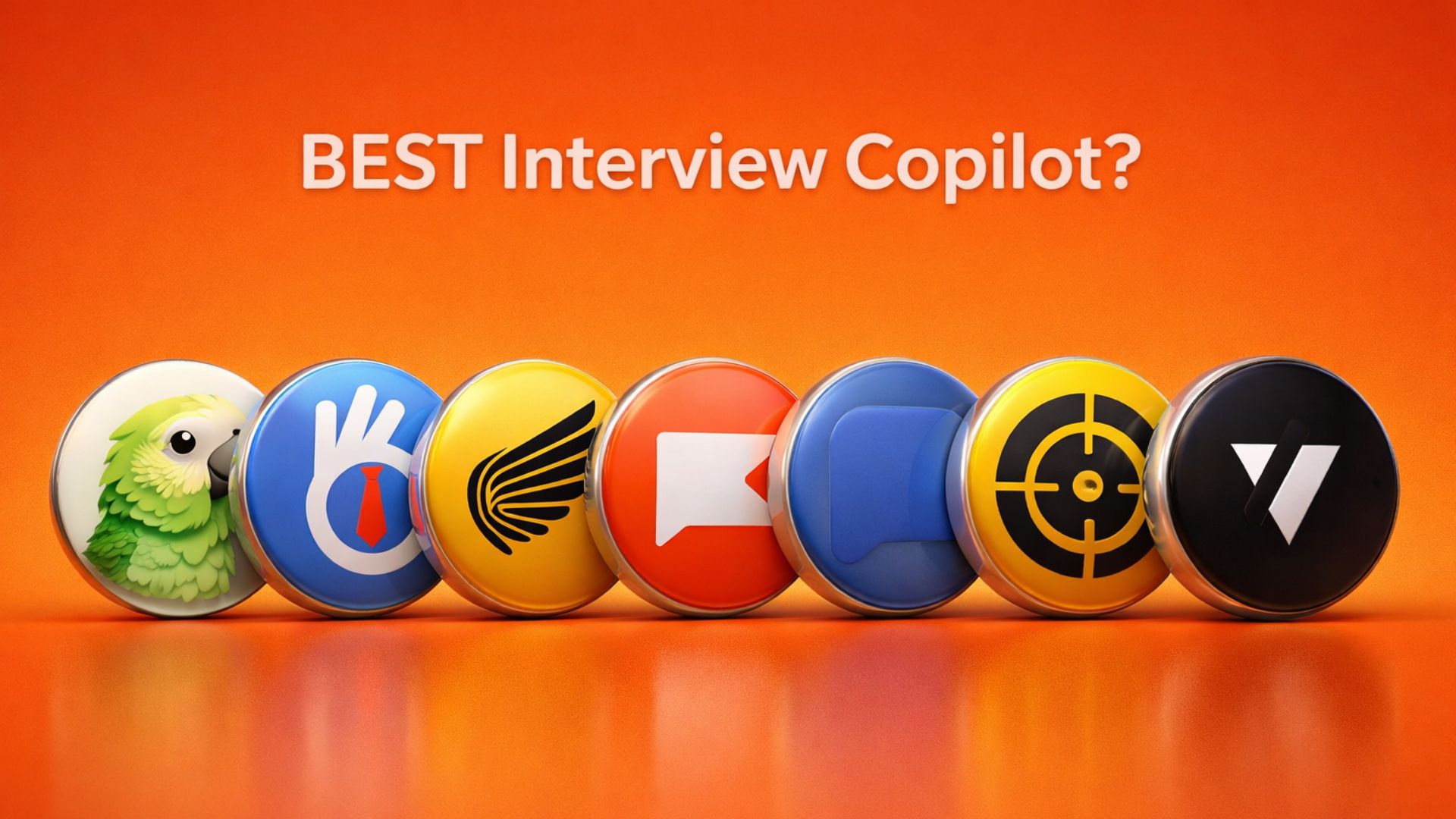
The 7 best AI interview copilots in 2026 ranked by latency, role-specific answer quality, and stealth reliability. Final Round AI, LockedIn AI, Interviews Chat, and 4 more tools compared with honest pros and cons.
Group Interview Tips: How to Stand Out Without Dominating
Group interview tips for standing out without dominating. What interviewers at McKinsey, Amazon, and Target score in group assessments, and the specific behaviors that advance candidates.