Anthropic Cofounder: AI Will Make Humanities Majors Valuable




Majors in the Humanities field were not considered a great career in recent times. But now, one of the most powerful voices in AI is saying that studying literature, history, and philosophy might be more important than ever.
Daniela Amodei, president and cofounder of Anthropic, doesn’t regret her literature degree. In fact, she believes the rise of AI makes humanities education more valuable, not less.
Anthropic Cofounder on the Importance of People Skills
In an interview with ABC News, Daniela Amodei, co-founder and president of Anthropic, discussed the company's approach to responsible AI and the future of AI. The host asked her whether she would choose to study literature again, knowing what she now knows about her future in AI.
Amodei, who studied literature at the University of California, answered:
“I ultimately believe in a world where AI is very smart and capable of doing so many things, the things that make us human will become much more important instead of much less important.
And what I mean by that is when we look to hire people at Anthropic today, we look for people who are great communicators, who have excellent EQ and people skills, who are kind and compassionate and curious, who want to help other people, because at the end of the day, people still really like interacting with people.”
So, while AI becomes more capable of handling complex tasks, she believes that the qualities that make humans unique will become even more valuable.
Soft skills such as strong communication, emotional intelligence, curiosity, kindness, and compassion will stand out in the future.
She revealed one of the key hiring factors at Anthropic, too. The company does not look only for technical expertise. It also values people who can explain ideas clearly, are excited about their job, and work well with others.
The point is that even in a highly automated world, humans still prefer interacting with other humans, especially in situations that require trust.
Anthropic Cofounder on Learning Humanities
That’s why she thinks the Humanities degrees will hold more value in the future, too:
“I actually think studying the humanities is going to be more important than ever.
A lot of these models are actually very good at STEM, right? But I think this kind of idea that there are things that make us uniquely human, understanding ourselves, understanding history, understanding what makes us tick, I think that will always be really, really important.
And I think the ability to have critical thinking skills and learn how to interact with other people will be more important in the future rather than less.”
She points out that today’s AI models are already very strong in STEM areas. They can solve math problems, write code, analyze data, and handle complex technical tasks with impressive accuracy.
So if machines are becoming excellent at those “hard skills,” then what makes people stand out?
That’s where the humanities come in.
When she talks about things that make us “human,” she means our ability to understand ourselves, our history, our culture, and what drives human behavior.
Subjects like literature and history help us explore why people think the way they do, how societies change over time, and what shapes our values.
AI can process facts about history, but it doesn’t truly understand how it shapes identity and meaning.
Bottom Line
So, while the world is more focused on how AI affects software engineering jobs, and all other professions are predicted to go extinct in the future, this perspective is really unique.
As machines get better at technical tasks, the human qualities that can’t be automated (understanding, empathy, critical thinking, and communication) will become even more valuable.
The AI revolution isn’t making humans obsolete. It’s forcing us to remember what makes us irreplaceable: our humanity itself.
How Humanities Skills Translate Into Jobs in 2026
The claim that AI makes humanities majors more valuable is only useful if you know how to communicate it to a hiring manager who studied finance or computer science. Here is how to make the translation.
Hiring managers are increasingly frustrated by AI outputs that are technically correct but contextually wrong, whether that means a marketing email that misreads the audience, a summary that emphasizes the wrong things, or a recommendation that ignores organizational politics. Those failures require human judgment to catch and fix. Humanities training, specifically close reading, argument construction, and cultural context, is exactly the skill set that catches those errors.
When you apply for roles, lead with what you can do rather than your degree. A history major who can synthesize 200 pages of competitive research into a three-slide briefing is describing a workflow that hiring managers can immediately picture using. Frame your experience in terms of deliverables and decisions, not coursework and grades.
The roles most accessible to humanities graduates right now include content strategy, policy analysis, UX research, communications, and AI evaluation. None of these require a computer science background. If the interview is your weak point, prepare the behavioral questions most common in these fields using AI Mock Interview before you walk in.
Frequently Asked Questions
How is AI changing the job market in 2026?
AI is automating repetitive cognitive tasks across industries, shifting demand toward roles that require judgment, creativity, and interpersonal skills. This is causing displacement in some areas while creating entirely new categories of work in AI oversight, prompt engineering, and human-AI collaboration. Workers who learn to use AI tools effectively are gaining a competitive edge.
Which jobs are most at risk from AI automation?
Roles involving highly repetitive data entry, basic content creation, and routine customer service scripting face the highest automation risk. However, complete job elimination is slower than headlines suggest. Most roles are being augmented rather than replaced, with portions of the work automated while humans handle the judgment-intensive parts that require nuanced reasoning.
What AI skills should you add to your resume in 2026?
Prompt engineering for tools like ChatGPT and Claude, experience with AI-assisted workflows in your specific domain, and familiarity with automation platforms like Zapier or Make are all valued. For technical roles, Python proficiency with popular ML frameworks is increasingly expected. For non-technical roles, showing fluency with AI productivity tools demonstrates adaptability.
How can you use AI to improve your job search?
AI tools can help you tailor your resume to each job description, generate cover letters, practice for interviews with real-time feedback, and research companies quickly. AI that answers interview questions's Interview Copilot provides answer guidance during live interviews so you stay focused and confident. Using these tools strategically can meaningfully shorten your job search timeline.
Table of Contents
Related articles
Visa Layoffs: 2,600 Cuts as Revenue Grew 14%
Visa layoffs hit 2,600 roles as revenue grew 14%. What the WARN filings show about who was cut, the 62-day notice, and how to explain it in interviews.

Workday Layoffs to Hit 400 Customer Support Jobs
These Workday layoffs will affect 400 customer support jobs in 2026 as the company reorganizes teams and reallocates resources
Rapid7 Layoffs: 12% Cut as Profit Outlook Rises
Rapid7 layoffs hit about 12% of staff, roughly 300 roles, on the same day it raised its full-year profit outlook. What it means for security job seekers.
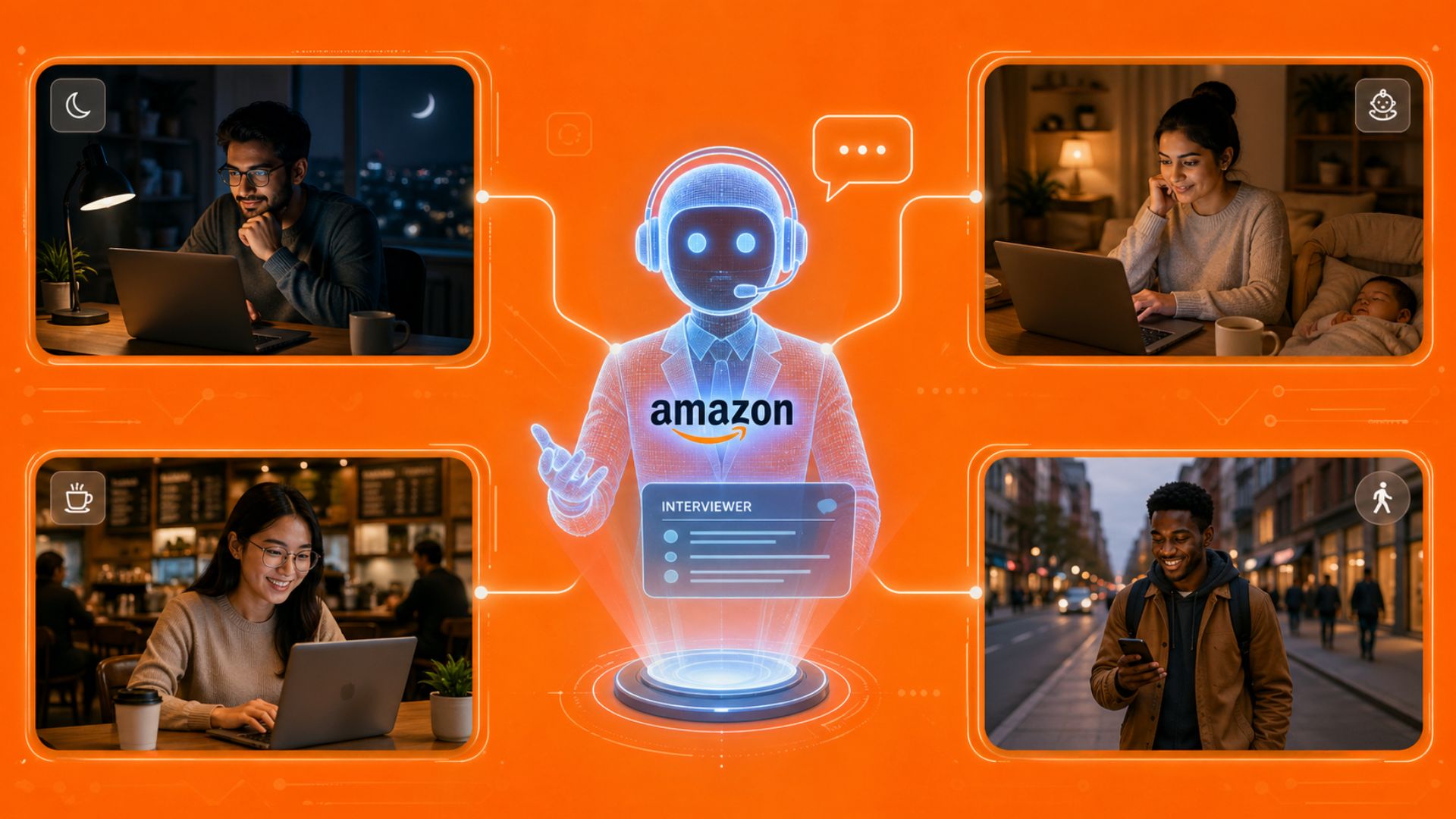
Amazon launches AI Agent Connect Talent for Job Interviews
Amazon has launched Connect Talent, an AI agent that conducts real voice interviews, scores candidates, and helps companies hire without delays.