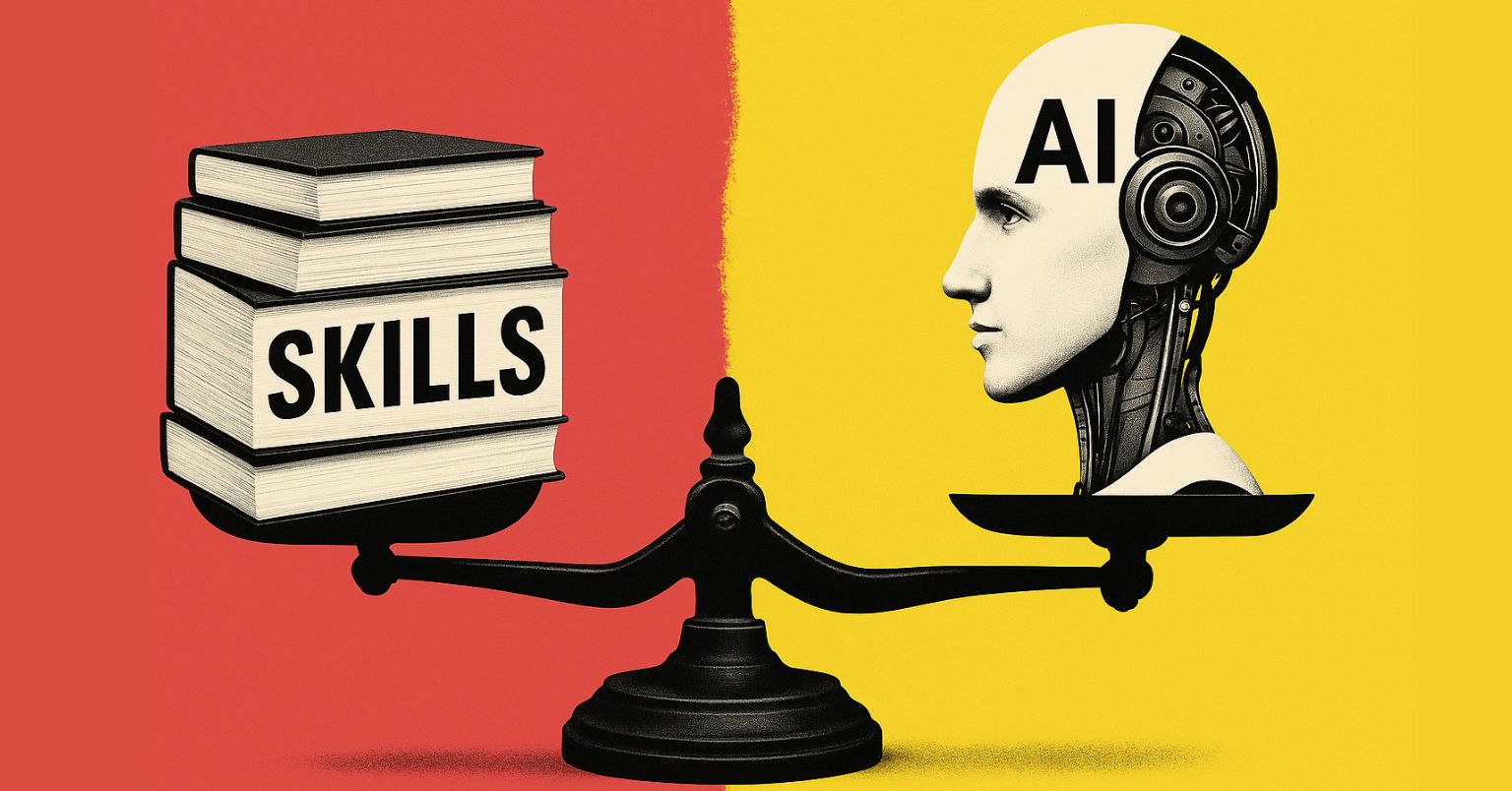
Andrew Yang warns AI could erase 40 million jobs in a decade




Andrew Yang estimates that 30 to 40 million US jobs could be eliminated by AI within a decade, roughly equivalent to the entire workforce of California. In a 2025 CNN interview, Yang based this projection on the fact that 44% of American jobs involve repetitive manual or cognitive tasks that AI can already automate. Here is what the data says about who is most at risk and what workers can do now.
Quick Answer
- Andrew Yang projects 30–40 million US jobs could be eliminated by AI within 10 years, calling it "catastrophic for many communities."
- According to Challenger, Gray & Christmas, US companies cited AI in approximately 55,000 planned layoffs in 2025 alone, with broader displacement estimates reaching 200,000–300,000 when attrition is included.
- Yang advocates for a $1,000/month Universal Basic Income (Freedom Dividend) funded by taxing AI companies as a policy floor for displaced workers.
What Andrew Yang Actually Said About AI and Job Loss
In a 2025 CNN interview with Michael Smerconish, Yang was asked about Dr. Roman Yampolskiy's warning that unemployment could reach 99% by 2030. Yang's response was measured but grim:
"No, it's going to get bad. I certainly don't think 99% bad. But if you use this 44% of jobs subject to automation as a benchmark, and then you figure that we're going to churn through, let's say, half of those jobs, over the next 10 years or so. That puts you at 30 to 40 million that get eliminated. And that would be devastating. That would be catastrophic for many, many communities. And I think that's realistic."
Yang's calculation is grounded in Bureau of Labor Statistics data: the US currently employs around 163 million people. If 44% of those jobs involve repetitive or rule-based tasks that AI excels at, and even half are displaced over a decade, that is 30 to 40 million jobs gone. For context, California's entire population is approximately 39 million people. For workers preparing for this shift, tools like AI mock interview practice are becoming essential for staying competitive in a tightening job market.
How Many Jobs Has AI Already Eliminated in 2025?
According to Challenger, Gray & Christmas, US companies explicitly cited AI in approximately 55,000 planned layoffs in 2025, representing about 4.5% of all job-cut announcements. However, researchers estimate the real figure is four to six times higher because employers often frame AI-driven cuts as restructuring, and the largest channel of displacement in 2025 was companies quietly not replacing workers who left through attrition rather than termination.
Broader estimates from SSRN research put the figure at 76,440 confirmed AI-displaced positions in 2025. Goldman Sachs estimates AI could displace 6–7% of the US workforce by 2030. The CNN segment cited additional data points: Amazon is reportedly automating 75% of its warehouse operations, potentially displacing 600,000 jobs; McKinsey projects AI could displace 40% of American jobs by 2030; the World Economic Forum projects 92 million jobs worldwide may be displaced by 2030. Workers navigating this landscape use tools like Interview Copilot to sharpen their performance in a competitive hiring environment.
Which Jobs Face the Biggest Risk From AI?
Yang's original 2018 prediction named truck drivers, retail workers, call-center workers, fast-food workers, insurance companies, and accounting firms as the first casualties of automation. In 2025, that list is proving accurate. Entry-level white-collar positions are especially vulnerable, Anthropic CEO Dario Amodei predicted in 2025 that AI could eliminate roughly 50% of white-collar entry-level roles in the next five years.
MIT's Iceberg Index estimates AI could replace 11.7% of the US labor market, with finance, healthcare, and professional services most exposed. Roles involving data processing, routine analysis, standard document drafting, and first-line customer contact face the highest displacement probability. Workers transitioning between sectors should use an AI resume builder to tailor their applications to the roles that are growing rather than contracting in 2026.
Yang's 2018 Prediction Is Coming True
Before his presidential campaign, Yang founded Venture for America (VFA), a fellowship placing college graduates in start-ups in economically challenged US cities. That experience showed him firsthand the gap between job creation and automation displacement. In 2018, Yang told The New York Times:
"All you need is self-driving cars to destabilize society. … That one innovation will be enough to create riots in the street. And we're about to do the same thing to retail workers, call-center workers, fast-food workers, insurance companies, and accounting firms."
In 2025, Yang told CNN: "It's aging very, very well, unfortunately." The jobs he named in 2018, retail, call centers, fast food, accounting, are precisely the sectors where AI displacement is most visible today. Workers in these fields are increasingly recognizing the warning signs of layoffs and acting proactively to protect their careers.
Yang's Policy Response: The Freedom Dividend and AI Taxes
Universal Basic Income (UBI) is a policy that gives every adult a fixed monthly income regardless of employment status. Yang's proposal, the Freedom Dividend, would give every American adult $1,000 per month, funded by taxing AI companies that profit from automation. He explicitly endorsed Anthropic CEO Dario Amodei's suggestion of higher taxes on AI companies.
A real-world pilot of UBI is currently running in Cook County, Illinois, providing $500/month to 3,250 households for two years. Yang also cautioned that cash alone is insufficient, displaced workers need purpose and community. Connecting with peers navigating the same job market challenges, such as the Final Round AI community, provides the social infrastructure that policy proposals cannot replace.
The Optimist Case: AI May Create More Jobs Than It Destroys
Not everyone shares Yang's pessimism. The WEF's 2025 Future of Jobs Report projects that while 92 million jobs will be displaced by 2030, 170 million new roles will be created, a net gain of 78 million jobs globally. MIT research finds that AI tends to increase demand for complementary skills: digital literacy, teamwork, critical thinking, and interpersonal communication. Historical precedent from the Industrial Revolution and the internet era suggests automation reallocates work rather than eliminating it outright.
The critical difference Yang identifies is pace: previous technological shifts happened over generations. AI is happening in years. Workers who combine technical adaptability with strong human skills are best positioned regardless of which forecast proves correct. Staying current with AI and jobs market news is one of the most practical ways to anticipate sector-level shifts before they affect your role directly.
Candidates who use AI for final round interviews to practice before the real interview typically feel more prepared and confident going in.
Related Blogs
- AI Job Displacement 2025: Which Jobs Are At Risk?, Deep data analysis on which roles face the highest automation risk and which are growing in 2025.
- 40 Jobs AI Can't Replace in 2026, According to Microsoft Research, Practical guide to roles where human skills remain essential through 2026 and beyond.
- Top Layoff Signs That Show You Could Be Next, How to read the early warning signs and protect your career before a layoff hits.
- Software Engineering Job Market 2026: Full Outlook for Developers, What the demand curve looks like for tech workers navigating AI-driven industry shifts.
Frequently Asked Questions
How many jobs could AI eliminate according to Andrew Yang?
Andrew Yang estimates AI could eliminate 30 to 40 million US jobs over the next decade, based on the premise that 44% of American jobs involve repetitive manual or cognitive tasks that AI can already automate.
What jobs are most at risk from AI automation?
Jobs most at risk include data entry, customer service, truck driving, retail, accounting, and other roles with repetitive or rule-based tasks. Entry-level white-collar roles are especially vulnerable in 2025 and 2026.
What is Universal Basic Income and why does Yang support it?
Universal Basic Income (UBI) is a policy that gives every adult a fixed monthly income regardless of employment. Yang proposes a $1,000/month Freedom Dividend to help workers survive job displacement from AI, funded by taxing AI companies that profit from automation.
How many jobs have been lost to AI so far in 2025?
According to Challenger, Gray & Christmas, US companies cited AI in approximately 55,000 planned layoffs in 2025. Broader estimates accounting for attrition suggest the real figure could reach 200,000 to 300,000 positions.
What can workers do to protect themselves from AI job displacement?
Workers can upskill in AI-complementary skills like digital literacy, critical thinking, and communication. Using an AI job hunter to target growing roles and practicing with AI coaching tools helps workers position themselves for roles AI cannot easily replace.
Table of Contents
Related articles

US Layoffs in 2025 Hit 5 Year High as Hiring Drops to 2009 Levels
946,426 job cuts announced through September 2025, while hiring plans fall 58% to the lowest level in 16 years, according to a new Challenger report.

Bill Gates: Which Jobs Are AI-Resistant — and Which White-Collar Roles Are at Risk
Bill Gates says white-collar and blue-collar jobs face major AI disruption within 4-5 years. Learn which jobs Bill Gates identifies as AI-resistant and which roles are most at risk.

HP to Lay off 6,000 Employees in Major AI-Driven Restructuring
HP plans to cut up to 6,000 jobs by 2028 to support its shift toward AI and ave $1 billion through this multi-year restructuring.

Satya Nadella Admits Microsoft Needs to Show More Empathy During Layoffs
A voice recording was obtained by CNBC with Satya Nadella admitting to having 'lack of empathy' when an employee showed concern over the wave of layoffs and its psychological effects on everyone.
Etsy Layoffs: 220 Cuts as Profit More Than Doubled
Etsy layoffs hit 220 roles, about 12% of staff, while core profit more than doubled. What it means for affected product and engineering workers.